
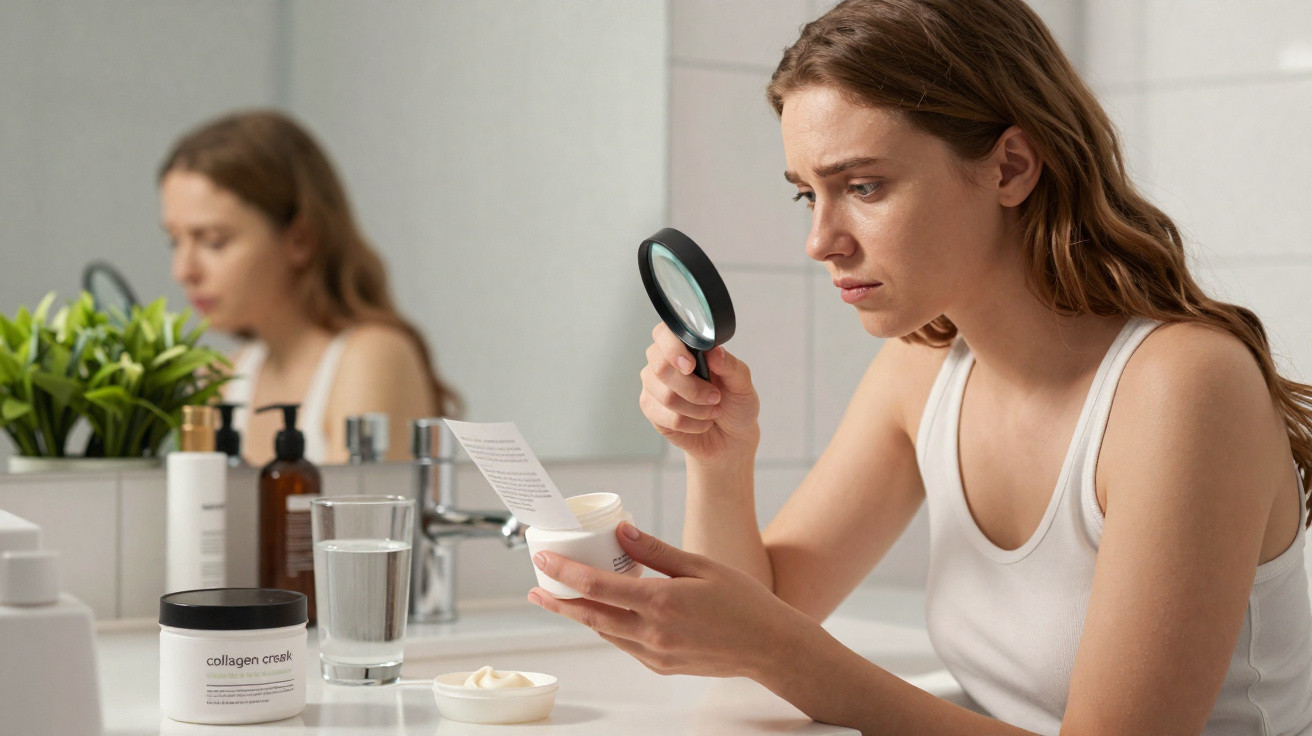
Collagen products are often marketed as a secret weapon against the first fine lines, tired-looking skin and creaky joints. Whether as a drink, powder, capsule or cream, the promise sounds tempting: smooth, plump, youthful skin almost like it used to be. Look a little closer, though, and it becomes clear that the scientific backing is surprisingly thin, while the market is vast-and expensive.
What collagen actually does in the body
Collagen is not some mystical beauty ingredient, but a straightforward structural protein. Roughly a third of all proteins in the human body are made up of collagen. It supports connective tissue, helps skin stay firm, makes tendons resilient and helps stabilise bones.
Your body produces collagen on its own: it breaks down dietary protein into amino acids and then assembles those building blocks into collagen structures. Particularly important amino acids include:
- Glycine
- Lysine
- Proline
This production process generally works reliably until around the mid-20s. After that, it gradually slows. You don’t necessarily notice immediately-changes tend to show up over time: fine lines, reduced elasticity, more slowly healing wounds and, for some people, joint issues.
"Natural collagen breakdown is a normal part of ageing-not an acute deficiency you can simply ‘top up’ with a powder."
Why collagen creams rarely deliver on their claims
In chemists and perfumeries, jars and tubes labelled “collagen cream” fill entire shelves. Advertising often implies the protein penetrates deep into the skin and plumps wrinkles from within. Dermatologists tend to be far more cautious.
In practice, collagen molecules are simply too large to pass through the skin barrier. They largely remain on the surface, where they may offer a mild conditioning effect-such as binding water so the skin looks a little smoother for a short time.
That kind of result is similar to what a high-quality, traditional moisturiser can achieve-often for noticeably less money. The collagen content in deeper layers of the skin does not meaningfully change.
What manufacturers often leave out
Many products rely on dramatic before-and-after images. What the adverts rarely spell out clearly:
- The visible “improvement” is often the result of lighting, make-up or image editing.
- The advertised “clinical studies” are frequently small, funded by the manufacturer, or methodologically weak.
- Percentage claims such as “90 percent fewer wrinkles” usually reflect subjective ratings from individual participants.
In short, striking marketing imagery is not the same as dependable proof of benefit.
Drinking collagen: a trend with questionable value
Just as popular as creams are collagen shots, powders and capsules. The usual chain of promises goes like this: drink collagen, it ends up in the skin, wrinkles diminish. The body does not work in such a direct way.
Whether protein comes from a steak, a protein shake or collagen powder, digestion breaks it down into smaller components first. These enter the bloodstream via the gut and become raw material the body can use. Where those building blocks go depends on many factors: what muscles, organs, bones and immune cells need-and only then, potentially, the skin.
"Collagen building blocks from powder don’t get a VIP pass straight to forehead lines and laughter lines."
So far, research on collagen supplements has not produced consistent, compelling results. Some studies report small improvements in skin moisture or elasticity; others find little to no effect. Many trials run for only a few weeks, include few participants, or have financial links to manufacturers.
Is there any real added benefit?
If you already eat a balanced, protein-rich diet, you typically supply your body with sufficient amino acids. In that situation, extra collagen supplements often benefit the manufacturers more than the people taking them.
They may be of interest at most for those who consume very little protein and choose such products for convenience. Even then, a standard protein supplement is usually enough-often cheaper and more versatile.
Risks and side effects are often downplayed
For healthy people, most collagen supplements are considered relatively well tolerated. But they are not entirely risk-free, and some points can get glossed over in advertising:
- Some products contain nicotinic acid, which can trigger hot flushes, redness or itching.
- Allergic reactions can occur, particularly with fish- or beef-derived products.
- Regularly exceeding the recommended maximum dose may place strain on kidneys and metabolism.
The German Federal Institute for Risk Assessment advises not consuming more than around five grams of collagen per day from food supplements. Many trend products already recommend daily portions in this range.
CHIP practical test: collagen products compared directly
Despite the weak evidence base, the market continues to boom. In a practical test, seven popular collagen powders were examined more closely. The focus was not on the promised effects, but on transparency and quality.
The assessment considered, among other things:
- Origin of the collagen source (e.g. beef, fish)
- Whether collagen types were specified
- Purity and additives
- Clear, verifiable labelling on the packaging
- Price per daily dose
The outcome showed clear differences. Some providers state openly which raw material the powder comes from, which collagen types it contains and the intended daily dose. Others remain vague, obscure the origin, or rely on unclear marketing terms.
| Aspect | Transparent products | Non-transparent products |
|---|---|---|
| Collagen origin | clearly stated (e.g. bovine collagen from Europe) | only “marine” or “bovine collagen” with no details |
| Collagen types | Types I, II, III specified | no information or only a generic umbrella term |
| Additives | short list, usually just collagen | flavours, colourings, sweeteners, “vitamin cocktails” |
| Price per day | moderate, easy to understand | sometimes significantly higher, hard to compare |
What genuinely helps with early wrinkles
Rather than spending a lot on questionable “miracle cures”, straightforward measures often deliver more-and support overall health as well.
- Consistent UV protection: Sunlight is one of the most powerful collagen destroyers. Using daily sun cream with an appropriate SPF has a proven effect on reducing wrinkle formation.
- Not smoking: Smoking damages blood vessels, reduces skin circulation and noticeably accelerates collagen breakdown.
- Enough sleep: Repair processes run at full speed overnight, including the production of structural proteins.
- A protein-rich, colourful diet: High-quality proteins, fruit and vegetables provide building blocks and antioxidants that support skin.
- Gentle skincare instead of aggressive regimes: Mild cleansing, hydration and, where appropriate, established ingredients such as retinol or niacinamide-aligned with a dermatologist.
These factors influence not only skin ageing but also wellbeing, weight, cardiovascular health and the immune system. Collagen supplements generally do not.
How to recognise worthwhile skincare versus empty promises
Beauty trends can feel overwhelming. A few simple questions help you judge what’s on offer:
- Are there independent studies with clear data, or only marketing claims?
- Does the promise sound almost magical (“10 years younger in 4 weeks”)? If so, scepticism is sensible.
- Is the labelling complete and easy to understand?
- Can you easily calculate the price per day or per month?
- Would a dermatologist recommend the ingredient too-or would they be noncommittal?
Answer those honestly and it becomes apparent: collagen powder and similar products are, at best, a luxury extra-not a necessity. When in doubt, a solid routine, discipline with sun and lifestyle, and acceptance that ageing can be slowed but not reversed, are usually enough.






Comments
No comments yet. Be the first to comment!
Leave a Comment