
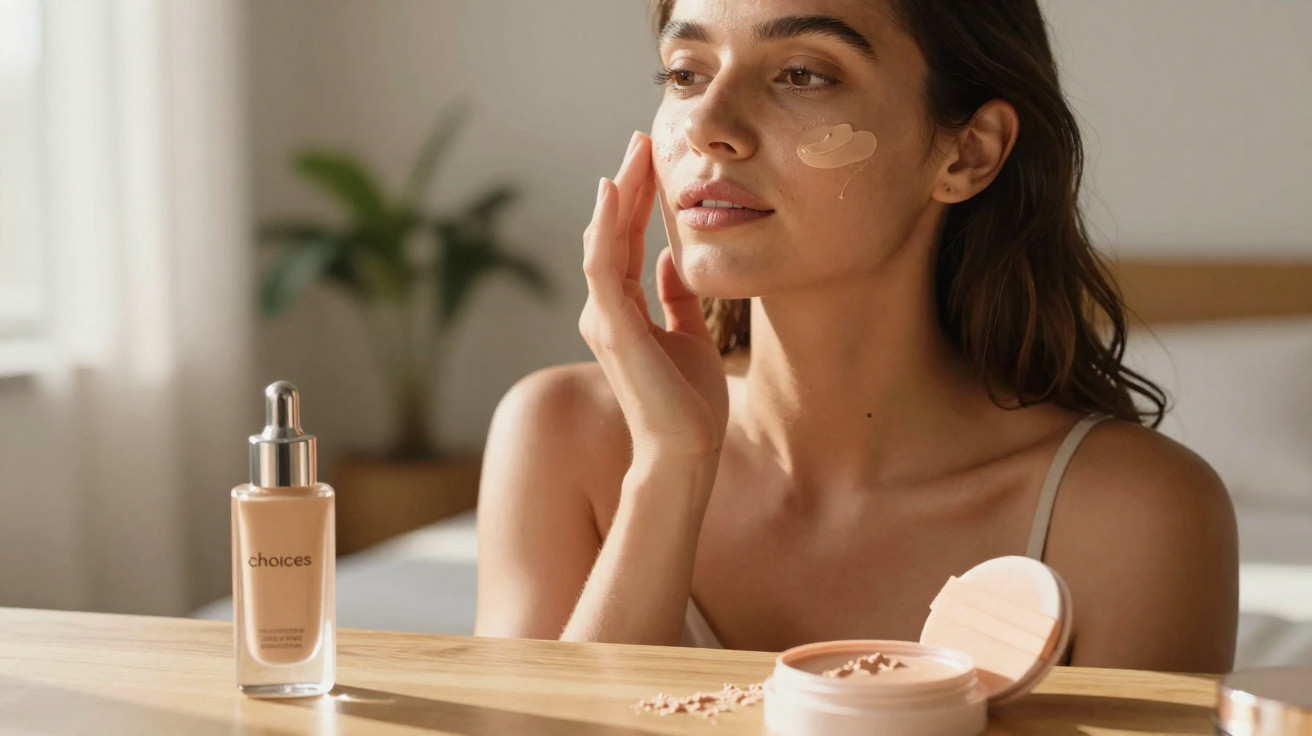
Shelves are packed with promises: “poreless”, “filter effect”, “glow in seconds”. Yet in real life, the hunt for a flawless complexion often ends with a cakey edge, a shiny forehead or fine lines that suddenly look more obvious. The difference between “Wow, your skin looks amazing” and “You’re wearing a lot of make-up” usually comes down to a few key details - especially texture, coverage, finish and how well the formula suits your own skin type.
The most important question: what skin type am I, really?
Before you think about brands or trends, it’s worth taking an honest look at your skin. The very same foundation can look completely different on two people.
- Normal skin: few blemishes; only occasionally a little shiny or slightly dry.
- Combination skin: a shiny T-zone (forehead, nose, chin), while cheeks are more normal or dry.
- Dry skin: tightness, flakiness; fine lines can look emphasised quickly.
- Oily skin: more shine, visible pores; make-up “slips” more easily.
- Mature skin: fine lines, reduced firmness, often paired with dryness.
The most beautiful complexion doesn’t come from using more product, but from using a product that behaves like your own skin.
Which texture actually creates beautiful-looking skin?
A foundation’s texture determines whether your skin appears fresh and lively - or dull, patchy and “plastered on”.
Liquid foundation: the all-rounder for a natural glow
Light, fluid formulas are often the secret to a true “second skin” effect. They sit in a thin layer, blend well with skincare and can be built up without fuss.
Particularly suitable for:
- normal skin
- combination skin
- dry skin
- mature skin
Liquid options with caring ingredients such as hyaluronic acid, glycerin or plant oils also add extra hydration. That can soften the look of dryness lines instead of highlighting them.
Cream foundation: comfort for dry and sensitive skin
Creamy textures - often in a pot or stick - feel richer and leave skin with a more nourished, comfortable finish. They’re especially helpful if you don’t want your skin to feel tight after application.
The key is not to apply too much. A thin layer is usually enough; otherwise the foundation can settle into fine lines quickly.
Mousse and powder: when they can ruin your complexion
Foamy mousse textures and pressed powders sound tempting: matte, blurred, an “Instagram filter” in a compact. On the skin, they often tell a different story.
- They can accentuate dry patches.
- They can make fine lines look older fast.
- They can sit on top of the skin rather than melt into it.
Professional make-up artists in particular caution mature skin against very powdery or mousse-dry products. Instead of looking youthful, they can create harsher edges and trace every line.
For mature and dry skin, heavy powders and mousse formulas are usually the worst choice - they can turn tiny lines into deep grooves.
The ideal finish: matte, glow or something in between?
Alongside texture, finish plays a central part. It decides whether skin looks naturally radiant or flat and over-powdered.
Radiant finish for tired, dull-looking skin
If you often look “grey” or fatigued, lightly glowy foundations can help. They subtly reflect light and give the face more dimension. This kind of finish tends to be especially flattering on:
- normal skin
- combination skin with drier cheeks
- mature, dry skin
The trick: keep the glow across most of the face, but control the T-zone with a little translucent powder so it doesn’t read as oily.
Matte to semi-matte for oily and very shiny skin
If you shine quickly or are prone to blemishes, matte or semi-matte products often feel more comfortable. What matters is that they are:
- formulated oil-free,
- non-comedogenic (won’t clog pores),
- still not chalky in appearance.
Mineral powders can absorb excess sebum well without feeling heavy - provided the skin isn’t significantly dehydrated.
Foundation by skin need: what suits whom?
Dry skin: skincare first, make-up second
Dry skin can seem to “drink up” foundation. Without rich enough prep, the pigment can settle unevenly and cling to every flaky patch.
- Use serum and moisturiser first, then foundation.
- Choose liquid or cream textures with hydrating ingredients.
- Instead of full coverage everywhere, use concealer only where needed, for example on redness.
This keeps the complexion natural and makes skin look plumper rather than dull.
Normal and combination skin: room to play with finish and coverage
This is the skin type that usually allows the most experimentation. Depending on the day and the occasion, you can go glowy or more matte.
If you have classic combination skin with a shiny T-zone, it’s best to go for:
- a lightweight liquid foundation,
- a semi-matte or natural finish,
- targeted mattifying on forehead, nose and chin using translucent powder.
Oily skin: control instead of piling on layers
Many people with oily skin try to cover shine by adding more and more layers. That often makes the problem worse.
Less product, but the right formula: that’s the game changer for oily skin.
A sensible approach is:
- oil-free foundations with a mattifying effect,
- lightweight textures that don’t clog pores,
- a whisper-thin layer of loose powder to set.
Mature skin: lightness over full coverage
The more texture your skin has, the thinner your foundation should be. Heavy, high-coverage formulas can settle into lines and make the face look tired.
These tend to work better:
- very lightweight liquid foundations or tinted moisturisers,
- caring ingredients with a lifting or smoothing effect,
- targeted concealer for under-eye darkness or pigmentation.
The right application: how foundation can look like real skin
Even the best-matched formula can look artificial if it’s applied poorly. Technique and quantity matter.
- Start small: put a small amount on the back of your hand - it’s easier to add more than to take it away.
- Work from the centre outwards: begin in the middle of the face (nose, cheeks, centre of the forehead) and blend softly out.
- Choose your tool:
- Fingers: warm the product and can look very natural.
- Brush: more precise and usually gives more coverage.
- Damp sponge: lifts excess and leaves a refined finish.
- Set the T-zone: lightly powder only where shine is a problem.
The ideal foundation isn’t visible. You only notice that the skin suddenly looks more rested, more even and fresher.
Foundation as skincare: what modern formulas can really do
Many current products are no longer just make-up. They combine pigment with caring or protective ingredients.
| Ingredient | Benefit for the skin |
|---|---|
| Hyaluronic acid | binds moisture and gently plumps fine lines |
| Antioxidants (e.g. vitamins C, E) | protect against free radicals and support an even-looking complexion |
| Sun protection factor (SPF) | extra protection from UV rays; helps prevent pigmentation marks |
| Soothing ingredients (e.g. aloe vera) | suitable for sensitive or easily reddened skin |
Even so, foundation doesn’t replace a full skincare routine. It can support your skin, but it can’t cleanse, provide intensive care or fully replace sun protection - especially because most people apply too little for that.
Mistakes that can make the complexion look older
A few common slip-ups come up again and again in consultations, and they can make the complexion look uneven or more aged:
- heavily fragranced products on sensitive skin
- overly dry, strongly mattifying formulas on mature or dry skin
- too much coverage for everyday wear, when a light tint would be enough
- harsh lines at the neck because the shade wasn’t blended properly
If you frequently feel like you can “see” your make-up, you’ll often do better with a shade that offers slightly less coverage and then covering only problem areas separately.
How to tell you’ve found the right foundation
A simple in-store test helps: apply the product along the jawline, not on the back of your hand. If the colour blends into your skin and is barely distinguishable after a few minutes, the shade is right. If the texture feels light, comfortable and doesn’t emphasise pores or lines, you’re close to the kind of foundation that genuinely improves the look of your complexion - rather than simply masking it with more product.



Comments
No comments yet. Be the first to comment!
Leave a Comment