
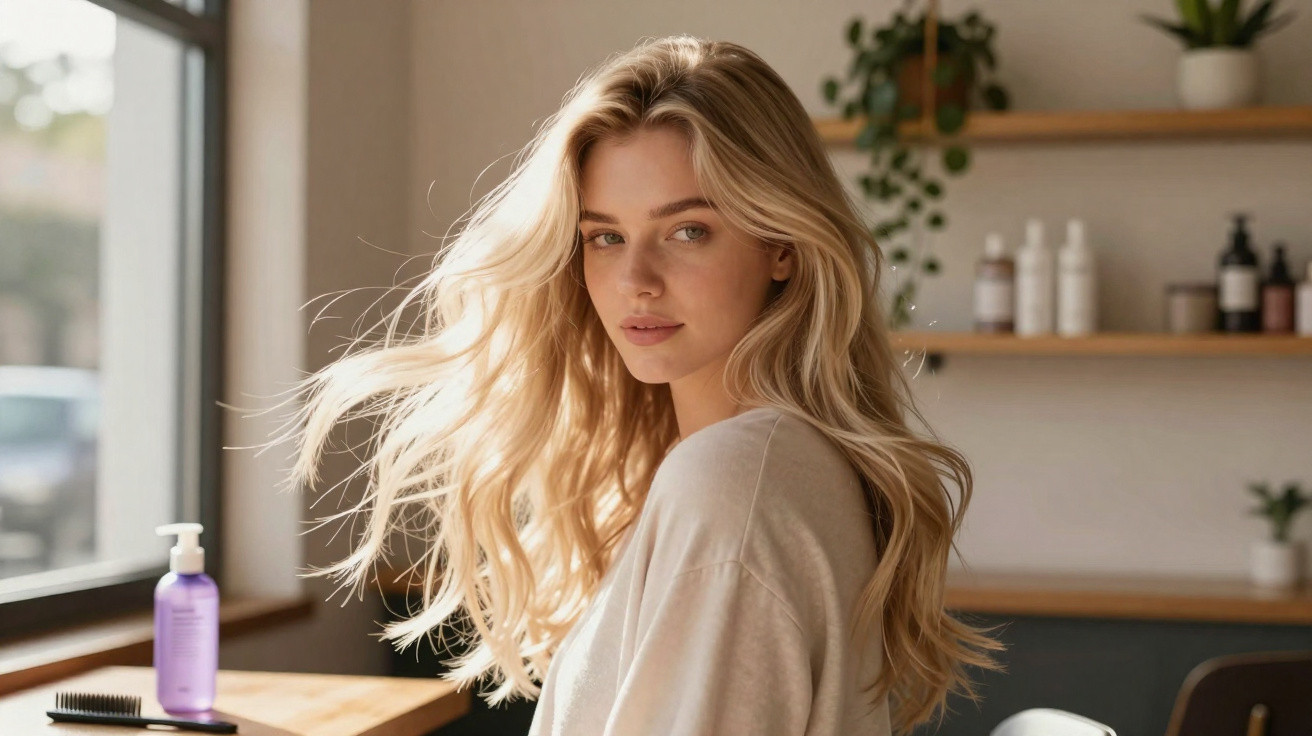
If an icy, classic blonde feels a little too severe, but you still want a noticeable change, there’s one standout look this season: Pavlova Blonde. The name nods to dessert, and the result reads like a soft-focus beauty filter for your face - which is exactly why the trend is turning heads.
What the pavlova blonde trend shade is all about
Pavlova Blonde isn’t your standard platinum. The shade takes inspiration from the airy meringue dessert: light and creamy, with the faintest hint of pink - always subtle.
"Pavlova Blonde is a very light, cool blonde with a creamy undertone and a fine pastel sheen that still looks surprisingly soft despite significant lightening."
What defines the look is the layering of several tones. Rather than a flat, single-process blonde, you get a nuanced blend of:
- cool, almost icy highlights
- gentle beige tones underneath
- the tiniest rosy reflections, usually most visible in daylight
Depending on the lighting, the hair can read more silvery, more creamy, or slightly rosé. That shifting effect creates the impression of extra fullness and movement - even on fine hair.
Who suits pavlova blonde best?
This trend doesn’t flatter every colouring in the same way. Before any lightening happens, colourists typically prioritise your skin tone.
Pavlova Blonde tends to be especially flattering if you have:
- fair to very fair skin
- a cool or neutral undertone (more rosy or olive than golden-tanned)
- light eyes - grey, blue, blue-green or cool green
On that base, the cool blonde looks balanced and can make the face appear fresher. Redness is visually softened, eyes can look clearer, and facial contours appear gentler.
If your natural colouring is warm and golden, it doesn’t automatically rule you out. Many salons now tailor Pavlova Blonde by leaning more into beige and dialling back the rosé so the result doesn’t look overly cool. The feel stays true to the original trend, but the shade is better matched to the individual.
When pavlova blonde can be more challenging
Some starting points are simply trickier:
- very dark natural hair (dark brown or black)
- heavily dyed lengths or hair that has been re-coloured frequently
- very damaged, fragile hair
In these cases, reaching the trend shade usually takes multiple appointments. Otherwise, uneven lightening or breakage becomes much more likely. If you’re starting from a very dark base, it’s wise to agree a phased plan with your stylist: begin with a darker blonde, then move gradually towards Pavlova - rather than forcing everything in one day.
How the colour is created in the salon
The trend shade almost always relies on significant lightening. In most salons, the process is built in stages:
- Lightening with bleach or a high-lift colour, often using foils or a balayage technique
- Toner/gloss to create the creamy finish and control the rosé sheen
- Fine lowlights, if more depth and movement are wanted
The skill lies in getting the hair light enough while still protecting its condition. That’s why many salons use modern bonding products designed to support the hair’s internal bonds during the lightening process.
"A good Pavlova look is high-tech work: without professional lightening, toner and bonding care, the shade quickly turns yellowish or dull."
Care rules: keeping pavlova-blonde hair healthy
A pale, cool blonde only looks premium if it stays glossy and doesn’t turn straw-like. Choosing Pavlova Blonde almost always means committing to a care routine.
Foundation: repair and hydration
After any bleaching service, hair typically loses structure and moisture. The most effective response is to build a routine around:
- repair masks with proteins (keratin, silk, wheat) to boost strength
- rich emulsions or conditioners with oils and butters to smooth the cuticle
- leave-in products such as sprays or lightweight creams for daily protection
A common salon rule of thumb: schedule an intensive mask at least once a week - twice is even better. A quick rinse-off rarely does much; leaving it on for 10 to 20 minutes makes a noticeable difference.
Colour care: keeping brassiness away
Cool blondes can shift towards yellow or orange quickly, especially with hard tap water or lots of sunshine. Targeted colour care helps:
- purple shampoo: counteracts yellow tones when the colour starts to warm up
- pink or pearly tinting products: enhance the delicate pastel effect of the Pavlova finish
It’s best not to use these every day, or the hair can take on a grey or lilac cast. For most people, once or twice a week is plenty.
Heat is the biggest enemy
Straighteners, curling wands and similar tools stress bleached hair far more than untreated hair. If you’re wearing Pavlova Blonde, it helps to stick to a few non-negotiables:
- apply a heat-protectant spray before every hot styling session
- lower the temperature (maximum 180°C for fine blonde hair)
- alternate heat-styling days with air-drying days
"Without heat protection, a perfect blonde looks dull and brittle after just a few weeks - and even the prettiest trend shade loses its impact."
How often does pavlova blonde need refreshing?
This is a relatively salon-intensive blonde, but with a bit of planning you can keep the upkeep manageable.
| Treatment | Interval |
|---|---|
| Lighten regrowth | every 6–10 weeks (depending on natural colour) |
| Toner/gloss for a fresh creamy finish | every 4–8 weeks |
| Bonding or intensive in-salon treatment | every 4–6 weeks |
If you choose balayage or softer highlights rather than a fully bleached head, you can often extend the gaps between appointments. Regrowth blends out more gently and looks less harsh.
Soft glam instead of harsh contrasts
Pavlova Blonde fits a bigger beauty shift that’s becoming more visible in studios and across social media: moving away from extreme contrasts and towards Soft Glam - blended transitions, delicate colour, healthy-looking texture.
The shade feels polished yet wearable. For everyday styling, loose waves are often enough to show off the tonal dimension. Pair it with natural make-up, glossy lips and a touch of highlighter and the overall effect looks filter-like - but still believable.
Everyday styling ideas
- relaxed beach waves to emphasise light reflection
- a low, sleek ponytail with a glossy finish
- a messy bun with lighter pieces framing the face
- a sleek, centre-parted bob that puts the cool tone front and centre
If you enjoy matching your make-up to your hair, you can echo the soft rosé note with cool pink blusher or a lightly raspberry-toned lipstick.
What to consider before your big blonde transformation
Heavy lightening always impacts the hair’s structure. A brief salon consultation is worth having before you commit. It should cover:
- any previous colouring or henna use
- current length and target length - you may need a trim
- budget for regular maintenance appointments and home-care products
With very long, weakened hair, it can be sensible to prioritise repair first and then move towards Pavlova over two or three appointments. That approach significantly lowers the risk of breakage.
If a full transformation feels like too much, you can also try the trend in a lighter way: a few ultra-light, pastel-toned pieces around the face - the so-called Face Frame - can create a hint of the Pavlova effect without bleaching the entire head. It’s an easy way to test whether the cool, filter-like finish suits you before going all-in.
Comments
No comments yet. Be the first to comment!
Leave a Comment