
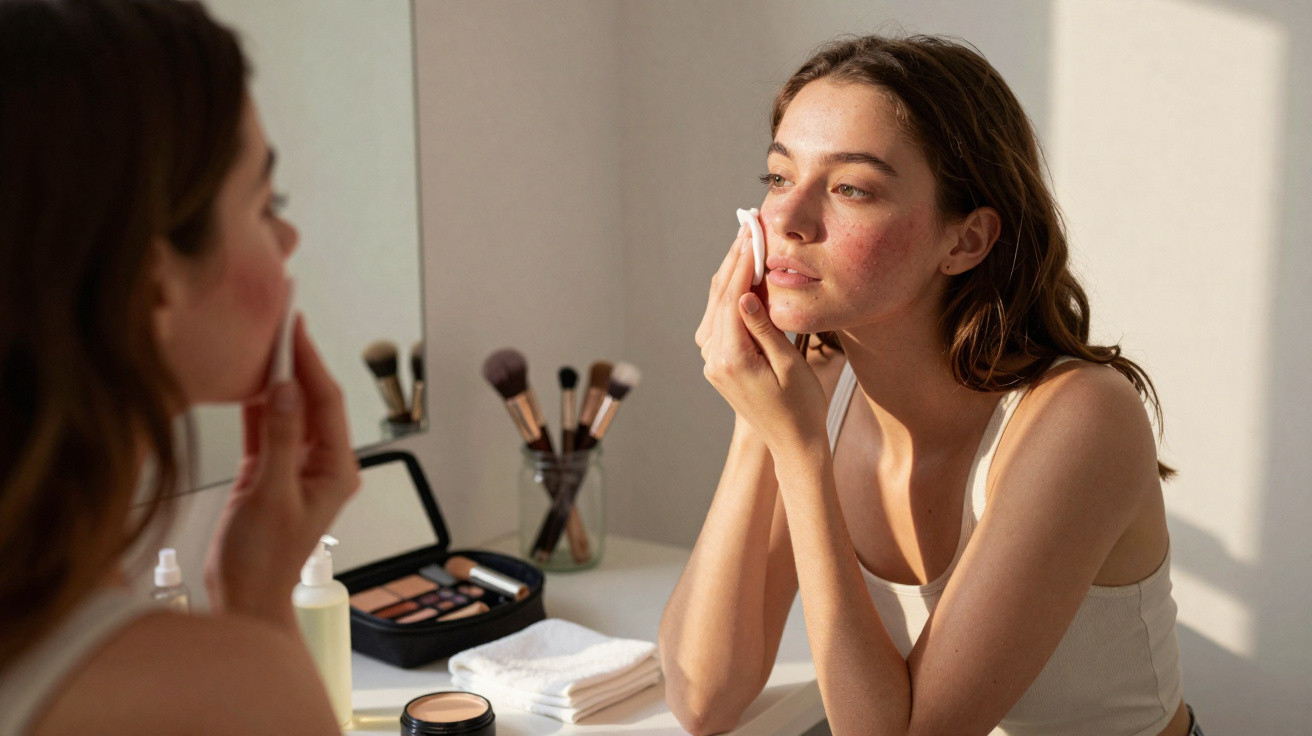
Reaching for foundation, concealer and powder is as routine for many people as brushing their teeth. It makes you look fresher, more awake, more “done”. But dermatologists are sounding the alarm: covering your skin completely every single day can cause long-term damage - even if the products are expensive, “clean”, or marketed as especially gentle.
Why wearing make-up every day is more than a beauty issue
Skin is not a neutral canvas you can pile colour onto without consequences. It is constantly active: it defends the body, regulates temperature and moisture, and renews itself continuously. Along the way it produces sebum, sheds dead skin cells and keeps its own balance in check.
Daily, full-coverage make-up interferes with that system - particularly when it involves multiple layers such as primer, foundation, concealer, powder and setting spray. What looks like a “perfect complexion” from the outside can translate into real strain underneath.
The more layers you put on the skin, the harder it becomes for it to breathe, cleanse itself and regulate naturally.
Occlusive film: when foundation effectively seals pores shut
A lot of make-up has what is known as an occlusive effect, meaning it forms a film over the surface of the skin. This is especially common with long-wearing, high-coverage foundations and mattifying formulas designed to stay “rock solid” all day.
That film tends to create two problems:
- Sebum cannot flow out as easily and backs up inside the pores.
- A warm, moist environment develops where bacteria can thrive.
Dermatologists see the results in clinic every day: sudden breakouts, persistent inflamed spots, congested pores and an overall more uneven-looking complexion - even in people who previously had hardly any acne issues.
Many then respond by applying even more make-up to hide the new blemishes, and the cycle continues.
Slow-building irritation: when the skin quietly reacts to ingredients
A second factor - and one that is often missed - is the ingredient list. Not every reaction shows up immediately as itching or a visible rash. In many cases, irritation simmers in the background.
Potential triggers include, for example:
- Fragrance in foundation, powder or setting sprays
- Preservatives in liquid products
- Certain colour pigments or glitter particles
The outcome is gradual irritation: the skin appears more sensitive, reacts more strongly to changes in temperature, flushes more quickly, or feels persistently “stressed” and tight. The most misleading part is that many people read this as “dry skin” and add yet another layer of skincare or make-up - rather than questioning what is actually causing the problem.
The more sensitive the skin becomes, the stronger the urge often is to camouflage it - and that’s where the real vicious circle begins.
Taking make-up off: the rescue step many people neglect
One of the biggest issues shows up at the end of the day, because many people do not truly take removal seriously. A quick swipe with a cleansing wipe, a splash of water, done - then straight to bed. For the skin, that is a nightmare.
If make-up residue, dirt, sweat and oxidised sebum remain on the face, the skin cannot regenerate overnight. The night-time renewal process slows down, pores stay blocked, and inflammation keeps smouldering.
Over time, the consequences are clear:
- more blackheads and spots
- a grey, dull-looking complexion
- increased fine lines due to chronic inflammation
- skin that generally looks more tired
Going to bed with make-up on robs the skin of any chance to recover and repair overnight.
How to wear make-up without punishing your skin every day
No one needs to give up make-up entirely. What matters is using it deliberately - starting with choosing products more carefully.
Lighter textures instead of a mask-like finish
Dermatologists often recommend “non-comedogenic” products, which are formulated to block pores as little as possible. Light, fluid textures, tinted moisturisers or BB creams are frequently kinder to the skin than heavy “full coverage” foundations.
It also helps not to use everything at once. Combining primer, a thick layer of foundation, concealer in several passes and powder can dramatically increase the occlusive effect. Fewer layers usually means less risk.
Plan make-up-free days
One of the most effective ways to support healthier skin is to build in regular breaks. Even one to two make-up-free days each week can make a noticeable difference. During that time, the skin can regulate itself more effectively, reduce excess sebum and strengthen its natural protective barrier.
Those days work best when you do not have important meetings or events - for instance at the weekend or when working from home. If you feel uncomfortable completely “bare-faced”, you could opt for clear mascara, a little eyebrow gel, or a nourishing lip balm. The key point is keeping your complexion as free as possible.
Hygiene: the overlooked issue with brushes, sponges and more
Another area of risk is not the product itself, but the tools you use. Foundation brushes, beauty sponges and powder puffs are perfect collectors of bacteria, sebum and dead skin cells.
If you rarely clean them, each application presses a small bundle of bacteria back onto your skin. If you are already dealing with blemishes, this can make things worse.
Dermatologists therefore advise:
- Clean liquid-foundation brushes and sponges thoroughly at least once a week
- Wash powder brushes every one to two weeks
- If you have active acne or inflammation, clean them even more frequently
For cleaning, a mild shampoo or a dedicated brush cleanser is usually enough. What matters is letting brushes dry completely before putting them back in a drawer.
The emotional pressure: when you feel “not presentable” without make-up
The physical effects are one side of the story. The psychological side can be just as significant. Many people feel incomplete without make-up - as if they are “not properly dressed” or even “unattractive”. Social media, with its filtered and softened faces, can intensify that pressure.
Dermatologists often notice that some people can barely tolerate seeing their own bare skin. Every pore and every small patch of redness is viewed as a flaw. Make-up then stops being a playful styling tool and becomes permanent armour.
The healthiest foundation is skin that doesn’t need to be hidden every day - because it feels stable and real.
How to wean your skin off daily make-up, gradually
If you have worn make-up every day for years, you are unlikely to stop overnight. A step-by-step approach tends to work best:
- Drop one product: for instance, swap a full face of foundation for concealer only where you need it.
- Reduce coverage: move from “full coverage” to a lighter, more sheer texture.
- Introduce make-up-free zones: leave the forehead or cheeks bare, for example.
- Schedule fixed break days: such as every Sunday with no complexion products at all.
At the same time, it is worth reviewing your skincare routine: gentle cleansing, well-matched moisturising, and targeted ingredients such as niacinamide or mild exfoliants can improve the look of the skin - and reduce the internal pressure to cover everything up.
What terms like “non-comedogenic” and “occlusive” actually mean
Many marketing claims sound reassuring but remain vague. “Non-comedogenic”, for example, means a product is intended to be formulated so it does not promote blackheads. It is not a guarantee against every spot, but it is a useful cue - especially for oily or acne-prone skin.
“Occlusive” describes substances that sit on the skin like a barrier. In skincare, that can even be helpful, such as for very dry or compromised skin, to reduce moisture loss. However, when combined with full-coverage make-up and ongoing sebum production, that barrier can quickly become a problem - particularly when it stays on the face for hours, day after day.
Understanding these terms and shopping more consciously protects your skin twice over: through smarter product choices and more realistic expectations about what make-up can do - and what it demands from your skin.
Comments
No comments yet. Be the first to comment!
Leave a Comment