
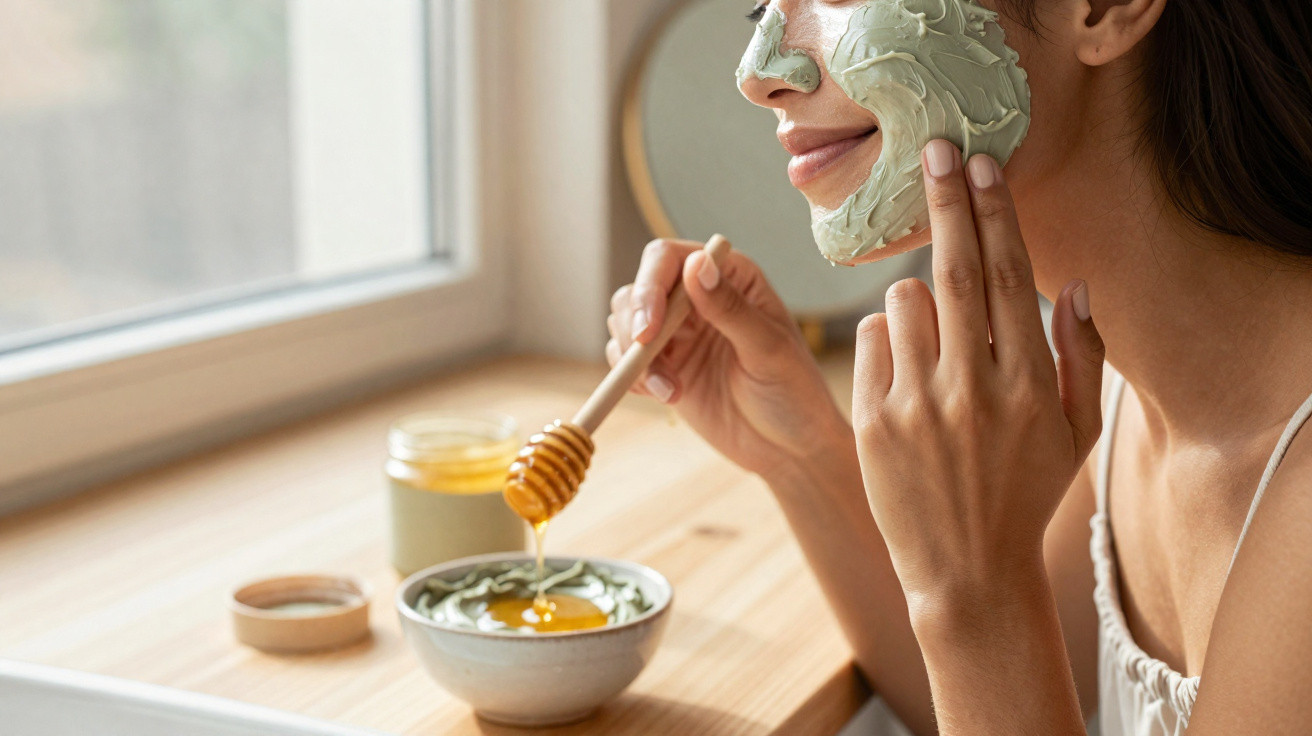
A clay and honey face mask brings together two familiar ingredients in straightforward skincare: clay helps draw out surface oil and everyday grime, while honey makes the blend feel less drying. The aim is skin that feels cleaner and more comfortable, with a healthier-looking finish-without relying on harsh stripping or heavy-duty exfoliation.
How does clay work on pores?
Clay is naturally rich in minerals and can absorb some of the excess sebum sitting on the skin’s surface. That’s why it’s commonly found in masks for oily skin, visible pores, and the “too shiny by lunchtime” feeling.
That benefit is still temporary and needs a careful approach. If clay is left to dry out too much on the face, it can feel tight, cause irritation, and leave the skin barrier more reactive-especially if your skin is dry or has been sensitised by acids.
Why does honey complement the face mask?
In a clay and honey face mask, honey works as a humectant ingredient, helping the skin hold on to a little moisture while the mask is on. Honey is also known for compounds with antimicrobial action, but it shouldn’t be treated as a remedy for acne, wounds, or severe inflammation.
Before you mix anything, it’s worth gathering the right ingredients and avoiding combinations that can aggravate facial skin:
- Use cosmetic-grade clay intended for skincare-never garden or building clay.
- Choose pure honey, with no added sugar, colourings, or flavourings.
- Avoid adding lemon, bicarbonate of soda, alcohol, or hydrogen peroxide.
- Patch test on your forearm before applying it all over your face.
- Don’t use it on broken skin, burns, very inflamed acne, or skin that is stinging.
How do you mix it in the right proportion?
A safer starting ratio is 1 tablespoon of clay and ½ teaspoon of honey. Then add filtered water, saline solution, or cold chamomile tea little by little until you get a creamy paste that spreads easily without running.
Make the mixture in a clean container using a wooden, silicone, or plastic spoon. Stir until it’s smooth and even, with no dry lumps-because concentrated bits of clay can scratch the skin during application.
How do you apply it and how long should you leave it on?
Your skin should be clean and dry before you begin. Apply a thin layer of the clay and honey face mask, steering clear of the eye area, lips, the corners of the nose, and any flaky patches.
To lower the chance of over-drying, stick to this simple routine:
- Apply the mask with a clean brush or freshly washed hands.
- Leave it on for 5–10 minutes, without waiting for the clay to fully crack.
- Mist a little water over it if it dries too quickly.
- Rinse off with cool or lukewarm water using gentle movements.
- Finish with a light moisturiser and, if it’s daytime, sunscreen.
How often should you use it for each skin type?
Oily skin often tolerates the mask once a week, as long as there’s no burning or flaking afterwards. Combination skin can keep it to the T-zone only, while dry or sensitive skin should use it less often, for just a few minutes, and with more honey or aloe vera gel added to the mix.
This mask tends to work best as an occasional option for oiliness, shine, and the feeling of congested pores. If you have persistent acne, marks, itching, frequent redness, or ongoing peeling, the safest route is to adjust your routine with dermatology guidance-because skin health depends on gentle cleansing, moisturising, and daily protection.





Comments
No comments yet. Be the first to comment!
Leave a Comment