
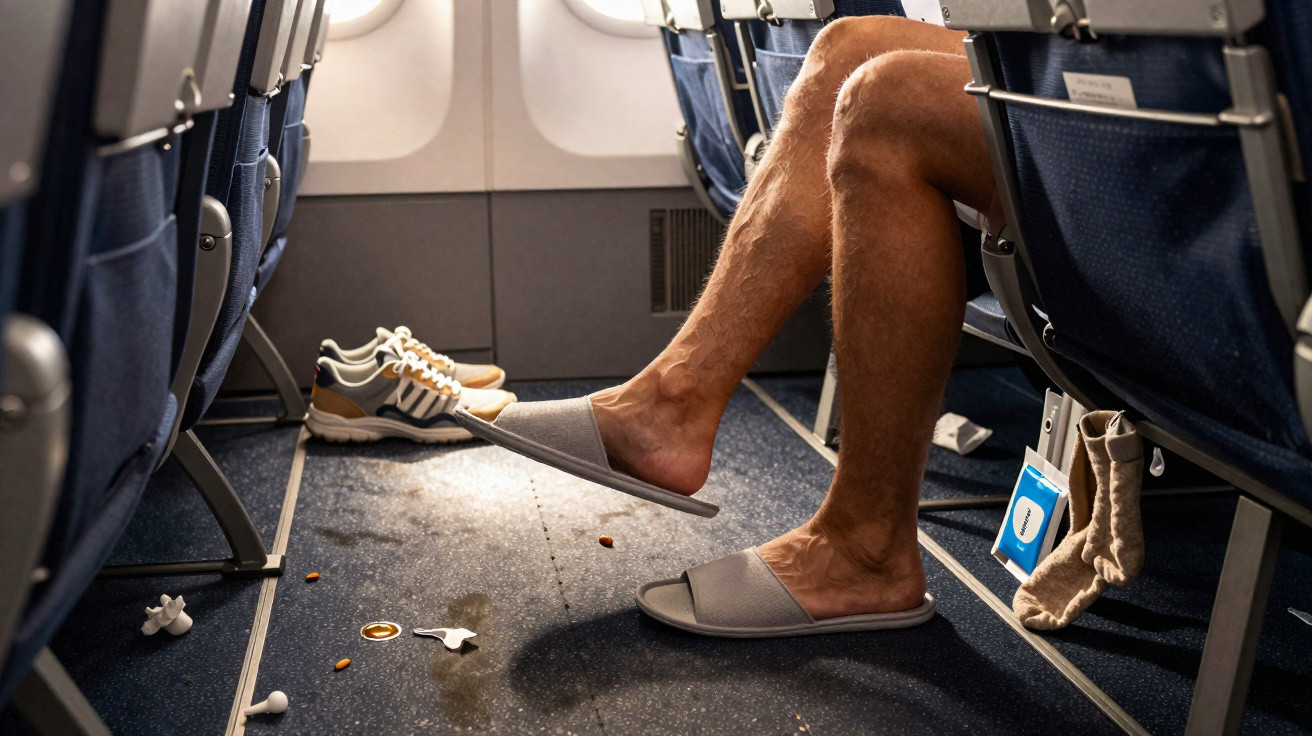
A habit that seems harmless on board can, however, become a hygiene headache - and in an emergency, genuinely dangerous.
After take-off, plenty of passengers get comfortable: shoes come off, socks come off, feet go up. On long-haul flights in particular, the seat starts to feel like a sofa at home. While that might sound relaxing, experienced cabin crew tend to view it very differently. Walking around barefoot at 10,000 metres exposes you to several avoidable risks.
Why the cabin floor is far dirtier than it looks
At first glance, an aircraft cabin can appear tidy: no obvious crumbs, no rubbish lying around, seats that look reasonably clean. That’s precisely the problem. Turnaround cleaning between flights is often done under intense time pressure.
“Stopover, disembark, boarding - there’s hardly any time left for thorough disinfection. Cleaning focuses mainly on what you can see straight away.”
Former flight attendants say cleaning teams sometimes have only around ten minutes for the entire cabin. The priority is appearance: collect rubbish, wipe noticeable marks, give armrests a quick once-over. Invisible germs and bacteria rarely get a look-in at that point.
If you then pad across the carpet barefoot or in thin socks, it’s effectively the same as walking without shoes on the Tube or a city bus. Food residue, skin flakes, spilled drinks and grime carried in on hundreds of shoe soles end up on the floor - and often stay there longer than you’d expect.
On-board toilets: not a place for bare feet
The washrooms are where it becomes especially problematic. Many passengers hope the puddles they can see on the floor are just water. The reality is often much less pleasant.
- splashes from the toilet or sink
- traces of urine or other bodily fluids
- spilled drinks that turn sticky
- soap and cleaning products that mix with everything else
When that ends up on bare feet or socks, germs transfer directly to the skin. Moisture also acts like a vehicle: bacteria can more easily enter tiny cracks, grazes or cuts. For people with sensitive or already compromised skin - including diabetics - infections are no longer just a theoretical risk.
And once you put your shoes back on, they often pick up that grime and carry it with you - literally all the way home.
Safety: in an emergency, shoes can be critical
Hygiene is one side of the story. Safety matters at least as much. Cabin crew have been stressing this for years: in a real emergency, every second counts. Wasting time hunting for shoes under the seat in front can be disastrous during an evacuation.
“If you have to run barefoot through debris, glass or scorching hot surfaces in an emergency, you’ll get injured quickly - and could end up blocking other people’s way out.”
After an emergency landing, sharp objects may be scattered around the cabin: shattered plastic or glass bottles, bits of metal, broken luggage components. A stable footing is already harder on slippery or uneven surfaces. On top of that, the aircraft skin or parts of the slides can become extremely hot.
Shoes provide a simple but crucial protective layer. They help prevent deep cuts and burns that can slow you down and obstruct escape routes. Official safety briefings don’t always explicitly say “keep your shoes on”, but crew guidance behind the scenes is very clear.
What flight professionals recommend wearing on your feet
Frequent flyers and crew tend to look for a balance of comfort and protection. Common advice includes:
- comfortable, closed shoes with a firm sole
- no high heels - they may even be banned during evacuations
- breathable materials to stop feet overheating
- thin cotton or performance socks to reduce rubbing
If you want to relieve pressure while seated, loosen or slightly open your shoes - but keep them positioned so they can be secured immediately in turbulence or if something happens.
Smells, consideration and small etiquette rules on board
Taking your shoes off isn’t only about hygiene and safety - it’s also about other people. In a sealed cabin, odours spread very quickly. What you barely notice yourself can be genuinely unpleasant for others.
Many flight attendants say foot odour is a frequent cause of complaints. For cabin crew, it’s a delicate issue: nobody likes addressing smells directly, but the mood can sour fast. On night flights in particular, when the air can already feel stuffy, it can affect the atmosphere across an entire section.
A straightforward fix is to put on fresh socks before boarding and keep your shoes on. If you’re prone to sweaty feet, foot powder or specialist insoles can help. That way, everyone in the row can breathe a bit easier.
Hidden dirt traps: overhead lockers
Out of sight but often surprisingly grimy: the overhead lockers. They mainly hold suitcases, rucksacks and bags whose wheels have already rolled through road dust, puddles, animal mess or station floors.
“Whatever sticks to the wheels ends up in the overhead locker sooner or later - whether it’s street muck, dust or residue from spilled liquids.”
Flight attendants also report bottles bursting and leaking lotion, shampoo or creams. If you place your coat or jumper straight into the locker, you can quickly transfer that mixture onto your clothes.
A practical trick: put jackets, jumpers or blankets on top of your hand luggage instead, or pop them into a simple fabric bag before stowing them. That creates at least a basic barrier between the textile and the locker surface.
How to behave more hygienically on a flight
With a few small adjustments, you can greatly reduce the chances of picking up unwanted germs on board - without panic or an obsession with disinfecting.
- Keep your shoes on - particularly for trips to the toilet and during take-off and landing.
- Use your own socks - if the airline hands out socks, it’s best to pull them over your own rather than replacing them.
- Keep your feet in your own space - don’t rest them on the seat in front or stick them into the aisle.
- Carry a small hygiene kit - wet wipes, hand sanitiser, and a spare pair of socks.
- Minimise contact with floor surfaces - don’t deliberately place items on the carpet, and definitely not food.
If you’re travelling with children, be doubly cautious: many like to play on the cabin floor or sit barefoot by the aisle. Non-slip slipper socks or lightweight trainers help keep them protected - and stop them padding through the cabin with bare feet.
Health risks: from athlete’s foot to minor cuts
Most people won’t become ill immediately just because they removed their shoes on a flight. Even so, the longer feet are unprotected - and the more often someone flies - the greater the likelihood of certain problems.
Typical risks include:
- athlete’s foot due to warm, damp, germ-laden carpets
- inflammation of small scratches or blisters
- contact allergies from leftover cleaning agents
- slips and falls when socks slide on smooth surfaces
People with a weakened immune system, open wounds on their feet or chronic conditions should take protection on board especially seriously. For them, an infection that seems minor can progress more severely.
How airlines clean - and where the limits are
Many passengers assume the cabin gets a complete clean after every flight. In reality, it tends to happen in stages:
| Cleaning type | Frequency | Focus |
|---|---|---|
| Quick clean | between two flights on the same day | rubbish, obvious marks, visible crumbs |
| Standard clean | usually overnight or after several flights | vacuuming, mopping, more thorough toilet cleaning |
| Deep clean | at longer intervals | upholstery, crevices, carpets, disinfection |
For passengers, that means the floor often looks cleaner than it truly is - especially with tight turnarounds and minimal time on the ground. If your skin then comes into contact with it, you’re making yourself unnecessarily vulnerable to germs.
Practical tips for comfort - without taking off closed shoes
Many people remove shoes because feet swell or feel cramped. A few simple steps can help, without going barefoot:
- choose shoes half a size larger than your everyday pair
- wear compression or travel socks - to support circulation
- move your feet regularly: rotate, flex and stretch
- while seated, lift your heels slightly as if marching on the spot
- drink enough, but avoid alcohol and very salty snacks
If you still want a brief break from shoes, use a thin personal travel mat or thick socks - and stay strictly within your own seat area. For walking through the cabin or visiting the toilet, put your shoes back on.
Ultimately, it’s a straightforward trade-off: a few minutes of shoeless comfort versus a real increase in hygiene, safety and consideration for others. With the right footwear and a little preparation, flying with shoes on is far more comfortable than many people assume.


Comments
No comments yet. Be the first to comment!
Leave a Comment