
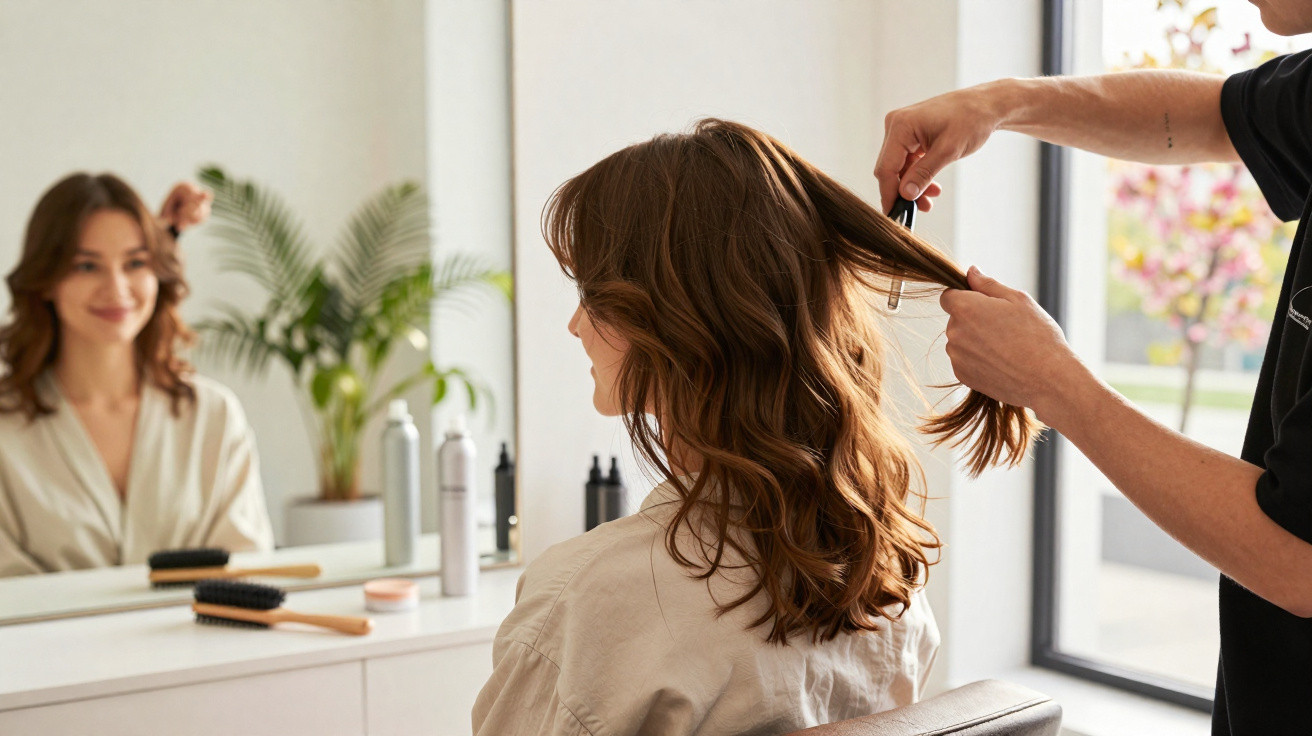
Hairdressers are leaning on a barely noticeable trick that can make fine hair look noticeably fuller in spring.
As the weather turns warmer, fine hair gets tested every year: higher humidity, the first hot days, hats put away - and suddenly everything lies limp. Rather than piling yet more styling products into the bathroom, professionals are taking a different approach. They build support inside the haircut, right at the roots. A particular cutting method can create more lift without sacrificing length.
Why fine hair collapses so quickly at this time of year
Having fine hair doesn’t automatically mean “not much hair”. In many cases, it simply means each individual strand is thinner and therefore has less natural structure. In spring, several factors combine and make the issue more noticeable.
- First warmth: the roots start to sweat sooner, so the hair sits flatter.
- Humidity: a touch of frizz, but roots that still look pressed down.
- Care mistakes: masks and oils that are too rich weigh down the lengths.
- The wrong cut: overly long, unstructured hair drags everything down.
Many people try to fix this with volumising mousse, dry shampoo or hairspray. It can help in the moment, but over time residue can build up on the scalp - and the hair ends up looking even heavier.
"The most sustainable lever for more fullness in fine hair is not in a bottle, but in the hairdresser’s scissors."
That’s why hair specialists increasingly choose spring cuts that create internal support, so the hair stands up better without the outer shape looking dramatically shorter. One technique in particular is standing out.
The best cuts for more fullness - and what to avoid
If your hair is fine, structure matters most. A very long, blunt look with no shape can make the lengths fall like a heavy curtain. That’s why professionals typically recommend clearly defined forms.
Haircuts that give fine hair more substance
- Short bob: a well-cut, slightly shorter bob adds instant body because the weight of the lengths is reduced.
- Shoulder-length with gentle layering: soft layers placed mainly in the lower section bring movement without thinning out the ends.
- Pixie or bixie: short, textured shapes can look surprisingly full even on a fine base.
The key is a silhouette that supports the impression of density. The outline should look clean - not wispy or overly feathered.
Mistakes that make thin hair look even limper
- Very long hair with no layers: the weight through the lengths pushes the roots down.
- Layers that are thinned out too aggressively: ragged ends can make hair appear even more sparse.
- Heavy care products right up to the roots: silicones and oils can coat the hair like a film at the scalp.
To genuinely feel a difference, many hairdressers now use a cutting approach that isn’t always named in the salon, but is obvious in the result.
Secret volume weapon: internal layering at the hair roots
Behind the current professional recommendation is a method often referred to in the trade as an “internal layering cut”. Essentially, the hairdresser works inside the haircut, close to the scalp, using tiny, concealed sections.
"Mini sections inside the haircut act like invisible supports and lift the outer hair – a bit like little pouches under a dress that raise the fabric."
Here’s how the process typically works:
- The hairdresser separates the top layer and exposes the inner sections.
- Very close to the scalp, small sections are trimmed slightly shorter.
- These shorter pieces provide a lift, pushing the hair above them upwards.
- From the outside, the cut looks full and compact, with no visible layers.
Particularly with a short bob or a well-managed shoulder-length cut, this internal structure can noticeably boost volume. The style doesn’t look “done”; it simply appears naturally fuller.
Why fine hair needs even more support as we age
Doctors point out that individual strands can become thinner over the course of life, especially due to hormonal changes. After the menopause, perceived hair density often drops by a noticeable amount. At that stage, any extra mechanical support can be helpful.
If you start early with a carefully planned, internally supported cut, you can offset part of that effect. Especially ahead of summer - when sweating and sun can weigh the roots down even more - a salon appointment like this can make a real difference.
Colour, care, styling: how to keep the new volume for longer
Even the best cut won’t help much if your colour choice and care routine work against it. With a few targeted tweaks, hair can look denser - without spending half an hour a day in the bathroom.
How hair colour can create the look of more fullness
A flat, single-tone colour - whether very dark or extremely light - can make fine hair look even flatter. Colour specialists tend to recommend more depth and nuance.
- Fine, multi-dimensional highlights that subtly emphasise individual areas.
- Gloss treatments in a shade that differs only slightly from your natural colour.
- Gentle lightening around the face for a more lively look.
This creates the impression of movement and structure. The amount of hair doesn’t change, but it can look noticeably thicker.
The right at-home routine: light, but consistent
Fine hair is sensitive to over-conditioning. With the best intentions, people often do harm without realising. A streamlined routine usually delivers more:
- Deep-clean the scalp once a week to remove styling residue and environmental build-up.
- Apply conditioner/care only through the lengths, never directly at the roots.
- Reverse the order: use conditioner or light care on lengths and ends first, then shampoo at the roots. This helps remove leftover product more effectively.
- Blow-dry with a method: dry upside down first until about 80% dry, then finish normally and shape.
"A client who had used heavy masks with lots of silicone for years said that after switching to a lighter routine and an internally built cut, she had far more natural lift - with no extra mousse at all."
How to ask your hairdresser for this technique
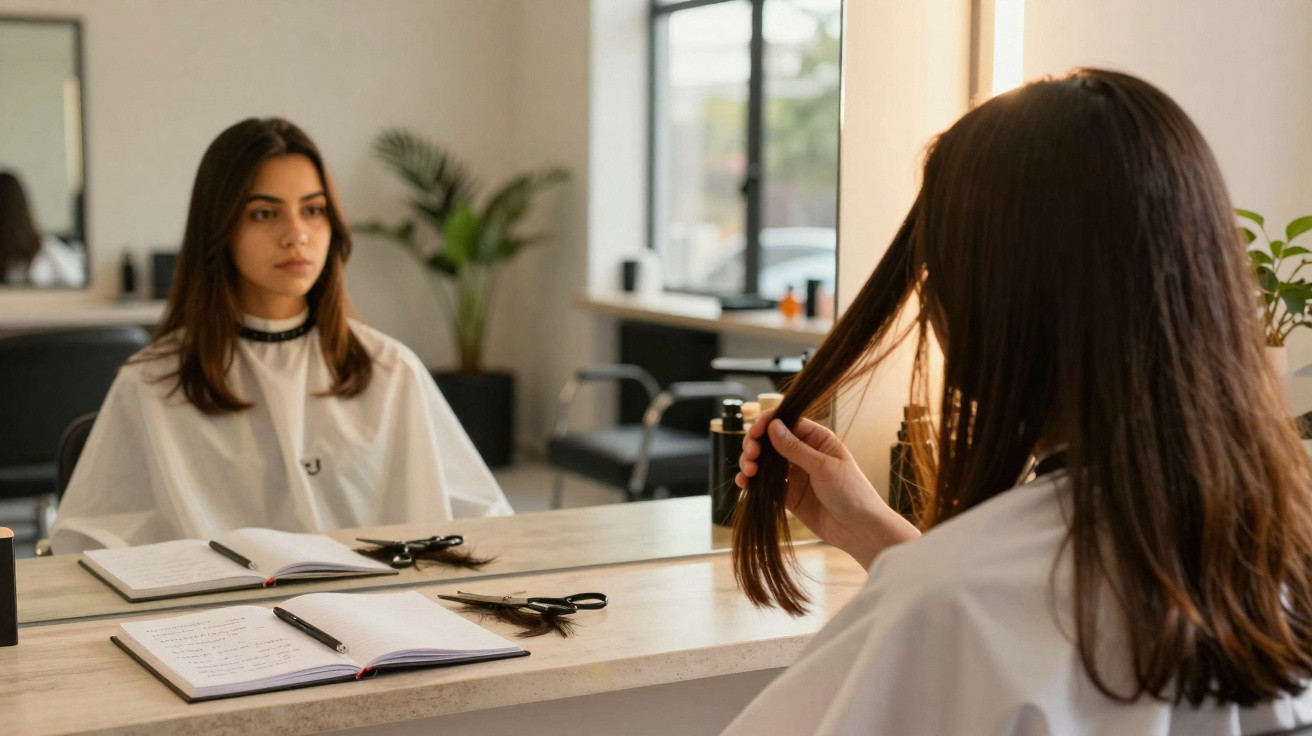
Many experienced salon hairdressers know this approach, but may describe it in different ways. If you’re unsure, it’s better not to chase technical terminology - just explain what you want clearly.
- Say you have fine hair but want to keep as much length as possible.
- Explain that your roots fall flat quickly, even when you use volumising products.
- Ask for a cut where small internal layers or supporting hairs are created to lift the roots, without thinning out the ends.
A good hairdresser will then explain which version they recommend, demonstrate the method on one or two sections, and ensure the outer line of the haircut stays compact.
Risks, limits and useful add-ons
As with any technique, internal building can be overdone. If too many inner sections are cut much shorter, the style can start to look unsettled after a few weeks. That’s why it’s worth going to a professional with experience of fine hair.
Lifestyle factors also play a part: stress, diet and medication can all affect hair quality and density. A cutting technique won’t solve those causes; it only disguises them to some extent. If you notice sudden heavy hair loss or discover bald patches, you should seek medical advice before anyone reaches for the scissors.
Used correctly, internal volume support can take a lot of pressure out of everyday life: less dry shampoo, less hairspray, and fewer moments of despair in front of the mirror. A well-timed spring appointment can set you up for lighter, fuller-looking hair throughout the whole summer.




Comments
No comments yet. Be the first to comment!
Leave a Comment