
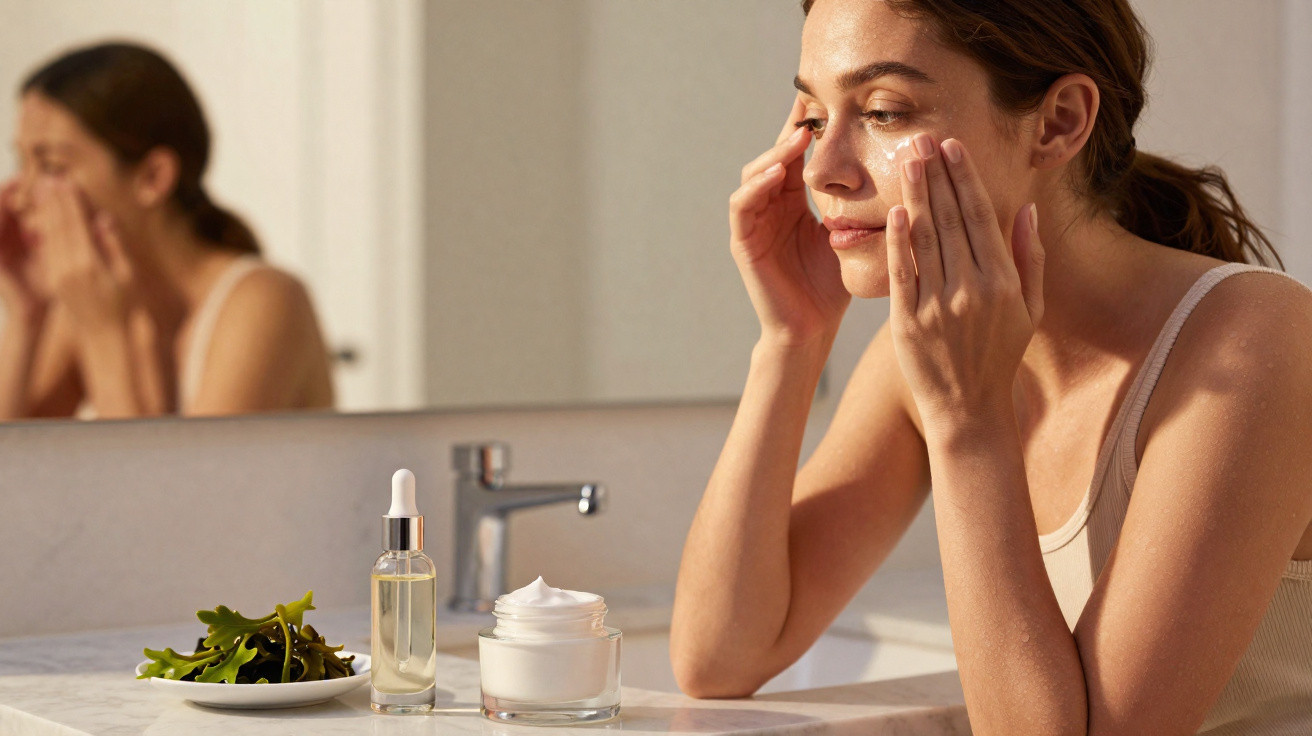
On beauty shelves right now, they are hard to miss: creams that claim to relax wrinkles, calm facial expression lines and act almost like a mini injection squeezed from a tube. The trend is not built on tricks, but on a blend of high-tech peptides, plant-derived actives and ingredients designed to target the skin’s nerve receptors.
What a cream with a botox-like effect can actually do
A cream is not a replacement for a medical Botox treatment. It cannot block muscles so strongly that your forehead becomes completely immobile. What it can do, however, is often enough for everyday life: it can soften the constant micro-movements of facial muscles and make the skin’s surface look visibly smoother and tighter.
"Cremes with a botox-like effect target two things: less muscle tension, more instant surface lifting."
In professional circles, two broad mechanisms are usually discussed:
- Gently relaxing the skin–muscle connection: so-called myorelaxing substances such as peptides or certain plant extracts can slightly slow the transmission of nerve impulses to the muscles-enough to make expression lines appear less pronounced.
- An instant effect via a tightening film: biopolymers or algae can sit on the skin like an invisible layer and contract a little as they dry. This creates an optical lifting effect that tends to stand out particularly in photos and under make-up.
Current development goes a step further still. Under the banner of neurocosmetics, laboratories are attempting to address specific receptors in the skin linked to tension, tingling or relaxation. The result is that the skin often feels calmer-and usually looks it too.
The most important ingredients in modern “Botox creams”
Peptides such as Argireline: high-tech building blocks that curb expression lines
One of the best-known ingredients is Argireline (Acetyl Hexapeptide-8). This peptide mimics part of the molecular complex involved where nerves communicate with muscles. Put simply, it interferes with signalling so the muscles contract a little less strongly.
In products such as Biocollagenix Botulin Like Effect, Argireline is commonly paired with:
- Hyaluronic acid in different molecular sizes, which binds water and plumps the skin from within,
- marine collagen, intended to support skin structure,
- niacinamide (vitamin B3), used to refine the look of the skin and boost radiance.
This type of formula is positioned to smooth quickly while also helping, over time, to reinforce the skin barrier and make the tissue more resilient.
Plant power: Spilanthol and Sichuan pepper
Particularly interesting are plant-based actives that have long been used in traditional medical systems. Spilanthol, for example, sourced from Acmella oleracea, has a mild local anaesthetic-like effect. In practical terms, the skin can feel slightly numbed for a short period; facial movements appear softer and fine lines can look shallower.
In creams such as BioBotulin 24h, Spilanthol is combined with:
- hyaluronic acid in three molecular sizes,
- nourishing oils such as argan oil, rice oil and almond oil,
- calendula for extra soothing support
Together, this creates a balance of relaxation, hydration and lipids that can make mature skin look noticeably calmer.
A further step is the use of Zanthoxylum bungeanum, better known as Sichuan pepper. Its active component-known as a sanshool-can modulate the skin’s sensory nerve receptors. Many people notice a mild tingling or prickling sensation that then settles into a more relaxed feel. Brands such as Amor Tuo Lab use this effect to target areas prone to expression movement, such as the forehead or the nasolabial fold.
Algae and biopolymers: an instant lifting effect for going out
For the immediately visible “wow” factor, algae and other sugar-based biopolymers are often used. One example is the red algae Gigartina stellata, found in products from manufacturers such as laCabine. The carrageenans it contains can form an elastic film over the skin that tightens slightly as it dries.
"Algae films do not deliver Photoshop, but they can create a visually smoother, calmer-looking complexion-ideal before appointments, parties or photos."
These creams frequently also rely on so-called soft-focus pigments. These micro-particles scatter incoming light so that lines and pores look less stark. The complexion appears more even, without needing heavy, full-coverage make-up.
Hydration, protection, care: the quiet heroes of the formulas
Even when packaging shouts about a “Botox effect”, much of the formula is often built around classic skincare components. These include:
- Aloe vera, which helps soothe the skin, offers a slight tightening feel and can leave a subtle film as it dries, as in Suavitas’ “Botox Cream”.
- Arginine, an amino acid that supports the skin’s moisture balance and circulation.
- Squalane or squalene, an oil similar to the skin’s own sebum, helping to keep the barrier supple.
- Antioxidants such as vitamin E or rice oil, which can neutralise free radicals generated by factors like UV light or fine particulate pollution.
Many of these products promise 24-hour hydration and work well as a make-up base. If you spend a lot of time in air-conditioned spaces or tend towards dryness in winter, you may benefit in particular-even when the muscle-relaxing effect itself is fairly subtle.
Who are creams with a botox-like effect really for?
Not every skin type needs the same level of intensity. Here is a quick overview of who tends to benefit most from which textures and actives:
| Skin type / need | Recommended cream characteristics |
|---|---|
| First fine lines (from around 30) | Lightweight texture, some peptide, plenty of hydration, optionally an algae film for short-term smoothing |
| Pronounced expression lines | Peptide complexes such as Argireline, Spilanthol, high-quality oils and combined hyaluronic formulas |
| Very sensitive, dry skin | Soothing plant extracts, minimal fragrance, gentle neurocosmetics, focus on rebuilding the barrier |
| “Glow” for events or photos | Algae or biopolymers with soft-focus pigments, fast-absorbing texture suitable under make-up |
Limits, risks and sensible combinations
Creams with a botox-like effect are generally classified as cosmetic products rather than medicines. That means the concentrations used must be safe and are not permitted to massively block normal skin function. If you are very reactive or tend to be sensitive with new products, it is wise to patch-test carefully with ingredients such as Sichuan pepper-first in a small area, then more broadly.
One common misconception is that the more tingling you feel, the better the result. That is not correct. Strong irritation can put the skin under ongoing stress and, over the long term, may even encourage more lines. A moderate effect that the skin tolerates well over several weeks is the more sensible aim.
It becomes particularly effective when you integrate these creams thoughtfully into your routine. In the morning, a lighter formula with a tightening film can be used, followed by UV protection on top. In the evening, a richer texture featuring peptides, hyaluronic acid and oils can be a better fit. If you have medical Botox treatments, these creams may help extend the look of results, but you should discuss this with the clinic providing your treatment.
If you want to test whether this kind of cream suits your needs, it makes sense to start with a product that does not rely on just one trending ingredient, but combines several building blocks: a little peptide, a little plant extract, hydration, a lipid phase and protection from environmental stress. The visible “wow” moment may be more restrained, but in many cases it lasts longer-and that is usually what matters most in day-to-day life.

Comments
No comments yet. Be the first to comment!
Leave a Comment