
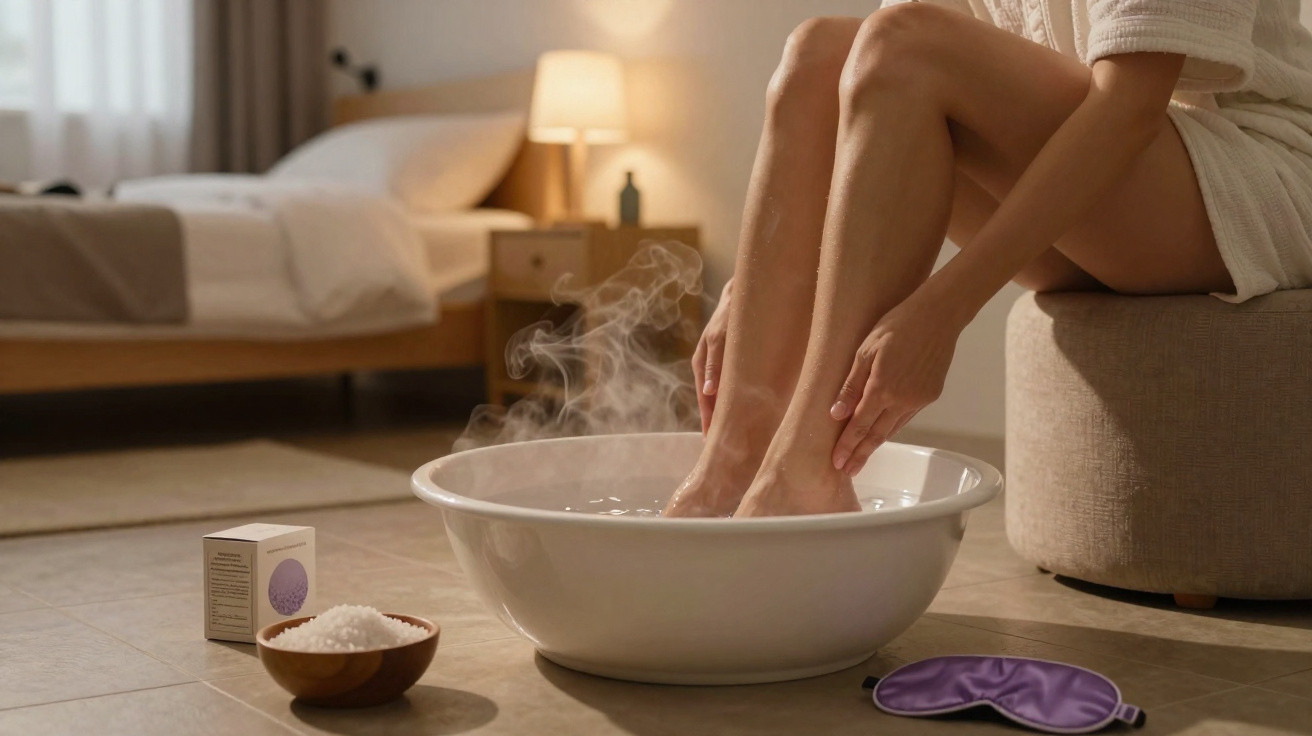
A foot bath with warm water, salt and bicarbonate of soda has become a familiar at-home ritual for easing tiredness, taking the edge off that “heavy feet” feeling and helping the body wind down for sleep. Specialists say it makes sense mainly because of the warmth of the soak, the break from the day and the comfort this kind of evening self-care provides.
Why does this ritual often work best before bed?
Experts note that evening is naturally more conducive to relaxation because the body is already slowing down. When you soak your feet in warm water, peripheral circulation tends to increase, muscles can feel less tight and the shift into rest may come more smoothly. It is a straightforward way to decompress after a long day.
That calming effect is not solely about the ingredients. A foot bath can help establish a routine of cleanliness and comfort, which matters for anyone who gets home with hot soles, mildly swollen ankles or stiffness after hours on their feet. In this context, salt and bicarbonate of soda usually act more as supporting players in a soothing sensory experience than as “miracle” agents.
What is a foot bath with salt and bicarbonate of soda for?
Specialists generally link this kind of soak to very practical aims. It may help when someone wants local relief, a fresher feeling and a short pause before getting into bed.
- Helps take the sting out of foot fatigue after walking or standing for long periods
- May lessen the perception of mild end-of-day swelling, particularly when the water is warm
- Makes it easier to remove residue and soften very dry skin
- Builds a relaxation ritual that can support sleep and a sense of wellbeing
Bicarbonate of soda is often mentioned because it can change the water’s pH and leave the skin feeling softer after soaking. Salt, in turn, is commonly associated with a sense of release and comfort. Even so, dermatologists and other health professionals emphasise that this does not replace treatment for ongoing pain, fungal infections, deep cracks or significant swelling.
Do salt and bicarbonate of soda make a real difference, or is warm water doing most of the work?
The most balanced view from specialists is that warm water is the central element. It is the most consistent part of the ritual because it warms the extremities, improves thermal comfort and encourages local relaxation. Salt and bicarbonate of soda may enhance the feeling of being cared for, but there is no strong basis for treating the mixture as a broad therapeutic solution.
This distinction helps separate perceived benefit from overblown promises. If someone feels better afterwards, it may be due to the combination of temperature, resting time, a gentle rub while drying the feet and the mental cue that the day is finished. On the other hand, using too much salt or bicarbonate of soda can dry the skin, particularly in people who are already prone to sensitivity.
What has science observed about warm soaking and sleep quality?
The connection between peripheral warming and sleep has been examined in studies on baths and foot soaks. A systematic review, The effect of foot bath on sleep quality in the elderly, published in BMC Geriatrics, brought together findings suggesting that a warm-water foot soak can be a simple and safe intervention to improve sleep quality in older adults. The study is available on an indexed PubMed page.
There is also an additional finding involving bicarbonate of soda outside a strictly foot-only setting. In the clinical trial Effects of sodium bicarbonate bath on the quality of sleep, published in Complementary Therapies in Clinical Practice, adults who took bicarbonate baths for seven days reported improvements in sleep parameters and satisfaction with rest. The paper can be accessed via the trial record on PubMed. This does not prove that any home recipe will deliver the same outcome, but it reinforces that warmth, immersion and an evening routine can influence how easily someone falls asleep.
How to do it safely without irritating your skin
According to specialists, the key is to keep the water warm-never uncomfortably hot-and to limit soaking time. A foot bath should feel soothing rather than harsh. Anyone with sensitive skin, diabetes, wounds, neuropathy or circulatory problems should be especially cautious.
- Use a clean basin and warm water that feels comfortable to the touch
- Keep your feet immersed for around 10 to 20 minutes
- If you like, add small amounts of salt and bicarbonate of soda, avoiding excess
- Dry thoroughly between the toes to prevent prolonged moisture
- Finish with moisturiser if the soles and heels are dry
If you notice stinging, itching, redness or flaking, it is sensible to stop using the mixture and monitor the reaction. Specialists also advise against using a foot bath as a shortcut to cover up recurring pain, frequent cramp, tingling or persistent swelling-signs that warrant clinical assessment.
When is this night-time care worth doing day to day?
A foot bath, salt, bicarbonate of soda and specialist guidance fit best in a very particular situation: a tiring routine, mild discomfort and the wish for calmer sleep without immediately turning to more complex solutions. For many people, the true benefit lies less in any strong chemical action and more in the overall package of warmth, pause, hygiene and a feeling of comfort.
Before bed, this kind of soak tends to be most useful when it becomes a regular ritual, with an appropriate temperature and attention to skin care. If your feet end the evening feeling less tight, cleaner and lighter, the body is more likely to take it as a clear signal of rest, relaxation and preparation for sleep.






Comments
No comments yet. Be the first to comment!
Leave a Comment