
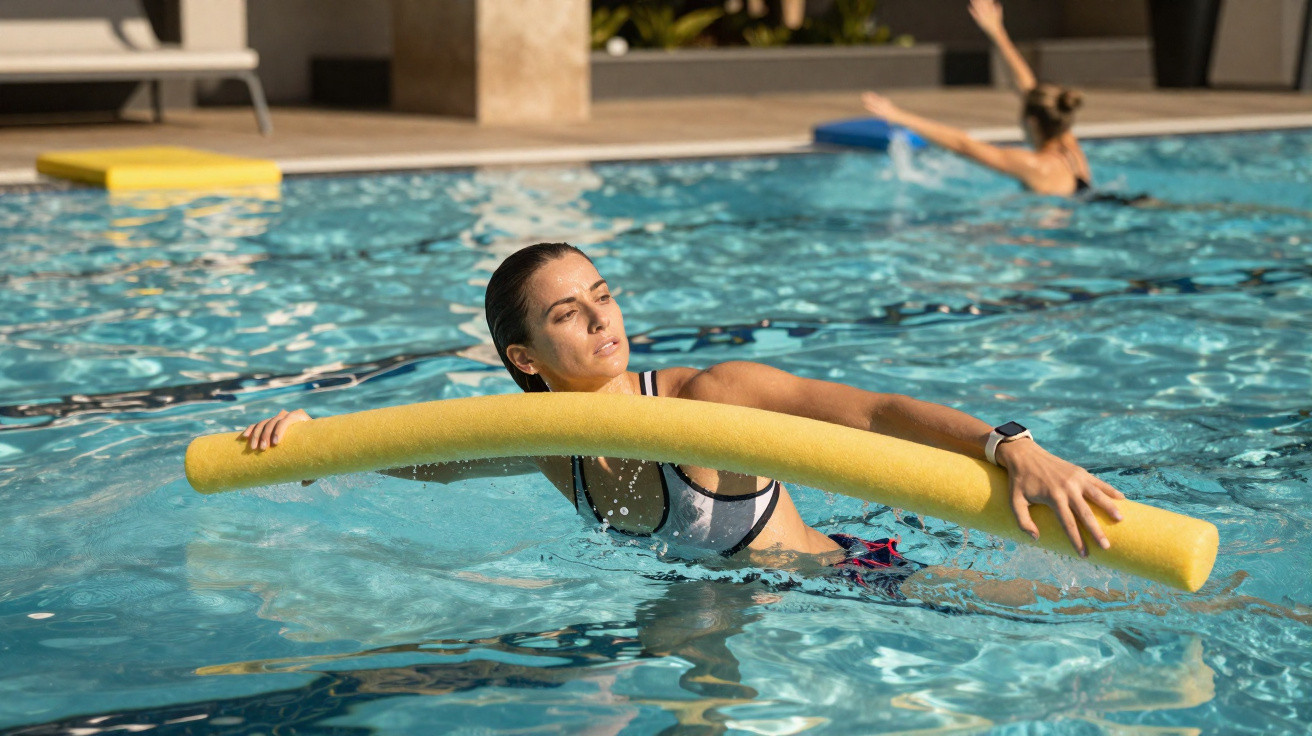
Water exercises have become an increasingly popular option for people who want to tone their abdomen while putting less strain on their joints. Because water provides natural resistance and demands continuous balance, the swimming pool is a supportive setting for activating the core and burning energy steadily, with plenty of scope to adapt movements for different fitness levels.
Do aquatic exercises for abdominal fat actually work?
When you move in water, resistance comes from every direction, so your muscles have to keep working without relying on external weights. This raises overall energy expenditure, while the abdomen is constantly engaged to stabilise the torso-particularly during actions that involve kicking, arm strokes, and changes of direction.
On top of that, the aquatic environment reduces impact through the knees, hips, and spine, which can make longer sessions possible with less overload. For anyone aiming to reduce abdominal fat, combining aerobic effort with core strengthening in the swimming pool is an effective approach-and often a more comfortable one for the body.
Which aquatic exercises activate the abdomen the most?
Certain movements are especially useful for recruiting the abdomen, lower back, glutes, and deep stabilising muscles, bringing together postural control and calorie burn. The intensity can be adjusted, which makes the session approachable for beginners and demanding for more experienced swimmers.
Among the most common exercises used in swimming pool workouts focused on the core are:
- Kicks with a kickboard: keep the body horizontal with the board out in front and the legs kicking continuously, holding the abdomen firm so the hips do not sink.
- “V” pike in the water: in the deep end, form a “V” shape with your torso and legs, which requires strong abdominal control and balance.
- Side leans (tic-tac): standing in the shallow end, lean the torso from side to side, engaging the obliques and waist.
- Alternating kicks holding the pool edge: hands supported on the edge or a float, body extended and fast kicks, with a cardiovascular focus.
- Dolphin kick: a wave-like motion from chest to feet, driven by the core and coordinated breathing control.
- Swimming with a pull buoy between the legs or a resistance band: only the arms move, while the abdomen stabilises the torso without help from the legs.
How do you put together an efficient aquatic core workout?
A well-planned session alternates strengthening drills with more aerobic blocks of swimming or sustained kicking. In this way, the body stays active for 20 to 40 minutes, taking into account your current fitness and, where available, professional guidance.
A straightforward structure might include a gentle warm-up, three or four abdomen-focused exercises with controlled repetitions, short active intervals between sets, and a finish with stretching in the water. Technique matters: if you lose alignment or start compensating elsewhere, that is your cue to reduce intensity or shorten the time spent on the movement.
Benefits of aquatic exercises for the abdomen and posture
Doing water-based activities that target the central area of the body on a regular basis helps strengthen the abdomen and lower back, improves stability, and supports better day-to-day posture. This tends to show up in simple tasks such as walking, climbing stairs, or carrying loads with less discomfort.
Another practical advantage is that the water makes it easier to keep up a routine if you are overweight or have a history of joint pain, helping you stay active without excessive impact. Combined with healthy habits and a balanced diet, swimming pool training becomes a reliable ally for managing abdominal fat and supporting overall health.





Comments
No comments yet. Be the first to comment!
Leave a Comment