
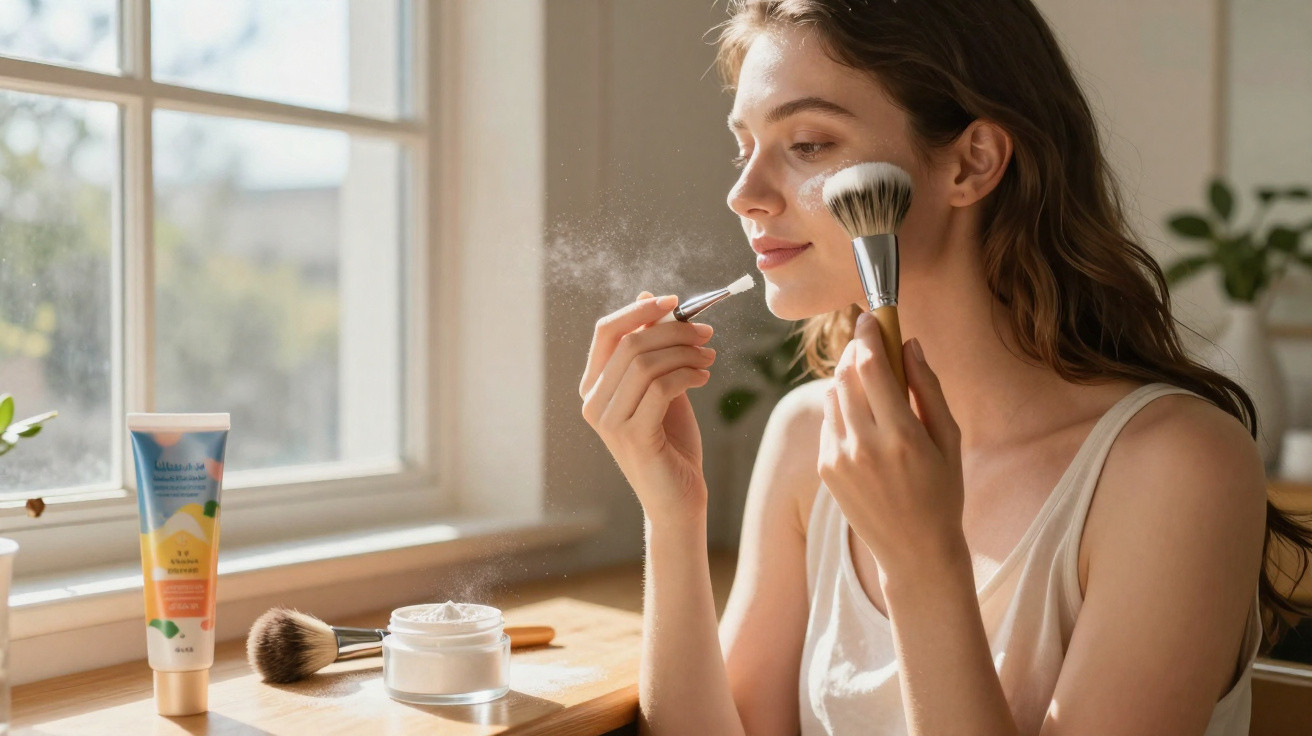
When you sit in the sun without protection in March or April, you often only realise in the evening how strong the radiation already was. Many people then instinctively reach for an old bottle of sunscreen from last summer. At the same time, there’s a growing appetite for simpler, “cleaner” options with less waste and fewer questionable ingredients. That is exactly where an unassuming white powder comes in-one that repeatedly performs well in studies.
Why the spring sun is more deceptive than it looks
Spring is easy to underestimate: it still feels cool, the wind takes the edge off, and you barely notice the warmth of the sun. Yet UV radiation is already climbing sharply, while skin has little natural protection after winter. Your body’s own pigment-based defence only builds up gradually.
"If you sit outside without protection now, you’re accumulating invisible skin damage-long before the first sunburn becomes visible."
Dermatologists stress that the skin “remembers” every dose of UV exposure. Repeated mild redness that people dismiss can, over time, contribute to wrinkles, pigmentation marks and, in the worst cases, skin cancer. In everyday life, the face, neck, décolletage and backs of the hands are particularly likely to be left uncovered.
Classic sunscreen is increasingly under scrutiny
Sunscreen remains essential for beach days and intense sun. Even so, questions about ingredients and environmental impact are becoming more common:
- Certain chemical filters are suspected of harming coral reefs.
- Some ingredients can trigger allergies or have hormone-like effects.
- Many tubes end up as plastic waste in general rubbish.
- The feel of creams-sticky, shiny, pore-clogging-puts many users off.
There’s also a practical problem: anyone who keeps a bottle “just in case” often uses it long past its best-before date. Protection can decline, even as people assume they’re safe.
White mineral powders: what’s behind the trend
As an alternative, mineral filters in loose or pressed powder form are attracting attention-especially products based on zinc oxide or titanium dioxide. These are among the most thoroughly researched UV filters available. As fine particles, they sit on the skin and reflect and/or scatter a large proportion of UV radiation.
"Mineral powders work like a tiny shield made up of countless white particles that repel light at the surface."
Rather than penetrating deep into the skin, they largely remain on the surface. Many people prefer that sensation because the product doesn’t “sink in”, and can feel more like a very light layer of make-up. Those with oily or blemish-prone skin often like the fact that powder tends to mattify rather than add shine.
What research says about zinc oxide and similar filters
A large number of studies indicate that zinc oxide covers both the UVB range (sunburn) and wide parts of the UVA spectrum (skin ageing). Titanium dioxide is particularly strong in the UVB range, which is why many brands combine the two.
The particle form matters. Very small nanoparticles can look more transparent, but were the subject of debate for a time. Current data suggests they do not significantly penetrate intact skin. Even so, many manufacturers are increasingly returning to slightly larger particles that are less “invisible” but highly stable.
Laboratory testing also shows that properly formulated mineral filters can remain stable during prolonged sun exposure and may not lose protection as quickly as some chemical filters that break down over time.
How to use white powder in everyday life
If you work from home by a window or are only popping into town briefly, you often don’t need a heavy film of facial sun protection. This is exactly the sort of day-to-day scenario where powdery mineral filters can fit well. They can be applied precisely where the sun hits most directly:
- forehead, nose and cheekbones
- upper lip and chin
- neck and parting, particularly if hair is thinning
- backs of the hands when walking or cycling
The powder is dusted on with a soft brush or sponge, much like setting powder in make-up. The key is not to be too sparing: meaningful protection requires a visible (though thin) layer. If you try to keep it completely “invisible”, you usually end up applying too little.
Who mineral powder is especially suitable for
This approach tends to suit people who:
- are usually only exposed to mild sun in daily life
- dislike facial sunscreen or don’t tolerate it well
- are prone to spots and avoid oily textures
- want to top up over make-up without smearing everything
For hours of direct sun at the lake or in the mountains, powder does not fully replace a classic water-resistant sunscreen with a high SPF. However, it can complement sunscreen sensibly-for example, for topping up on the nose or on areas that become shiny.
How environmentally friendly is it really?
Mineral powders are often sold in smaller packs made from glass or sturdy plastic and are frequently refillable. That can mean far less plastic waste than buying large tubes year after year. Because zinc oxide and titanium dioxide are not water-soluble, they can still enter wastewater when you shower, but they affect aquatic organisms differently from some chemical filters.
"Especially if you swim a lot in lakes or the sea, mineral products can reduce pressure on waterways to some extent-even if they aren’t completely ‘invisible’ to the environment."
Many brands now pair UV protection with short, easy-to-read ingredient lists and avoid fragrance or microplastics. That not only benefits sensitive skin, but also appeals to people who want to make more conscious purchasing choices.
Common mistakes with mineral sun protection
The biggest misconception is thinking that a light dusting once will keep you protected all day. Like any form of sun protection, mineral powder needs reapplying-particularly if you sweat, touch your face, or keep taking a scarf on and off.
- Too little product: If you apply only the thinnest veil to avoid a white cast, you rarely reach the stated protection.
- Uneven coverage: Gaps at the edges, around the ears, or along the hairline are easily missed.
- Forgetting the hands: In spring, hands are constantly exposed and often show visible ageing first.
- A false sense of security: In the mountains or around reflective surfaces such as water, powder alone is generally not enough.
Combining it with skincare and make-up
If you already use a day cream with light SPF, mineral powder can be used to reinforce protection in targeted areas. One possible routine:
- gentle cleansing in the morning
- day cream suited to your skin type
- optional: a light sunscreen with a moderate SPF
- then an even layer of mineral powder on top
Mineral powder can also be applied over liquid foundation. Many people use it as a mattifying finish that also adds extra protection. If your skin is very dry, it’s important to moisturise well beforehand, otherwise powder can look chalky and uneven.
Risks and limitations of “sun powder”
As convenient as the idea is, it still has limitations. People with very fair, sensitive skin or a family history of skin cancer should discuss their approach with a dermatologist. Pigmentation disorders, certain medicines or hormone treatments can greatly increase the skin’s sensitivity to light.
Inhalation is another consideration. Loose powders shouldn’t be applied in billowing clouds; instead, use a brush close to the skin in a controlled way. Special pressed formulations reduce this risk. Parents should not dust children with loose powder; for them, classic mineral sunscreens are generally the better option.
What pays off for your skin over the long term
Many people don’t notice the benefit of consistent sun protection after a week, but after years: skin can look smoother and more even, with fewer pigmentation marks. Those who manage to build daily SPF habits tend to gain the most over time.
For some, that means keeping sunscreen for the beach and the mountains, while relying on powdery mineral products day to day because they’re easier to stick with. Others use both, or shift their focus depending on the season. What matters is finding a routine you can realistically maintain-in March, in July and on every day in between.



Comments
No comments yet. Be the first to comment!
Leave a Comment