
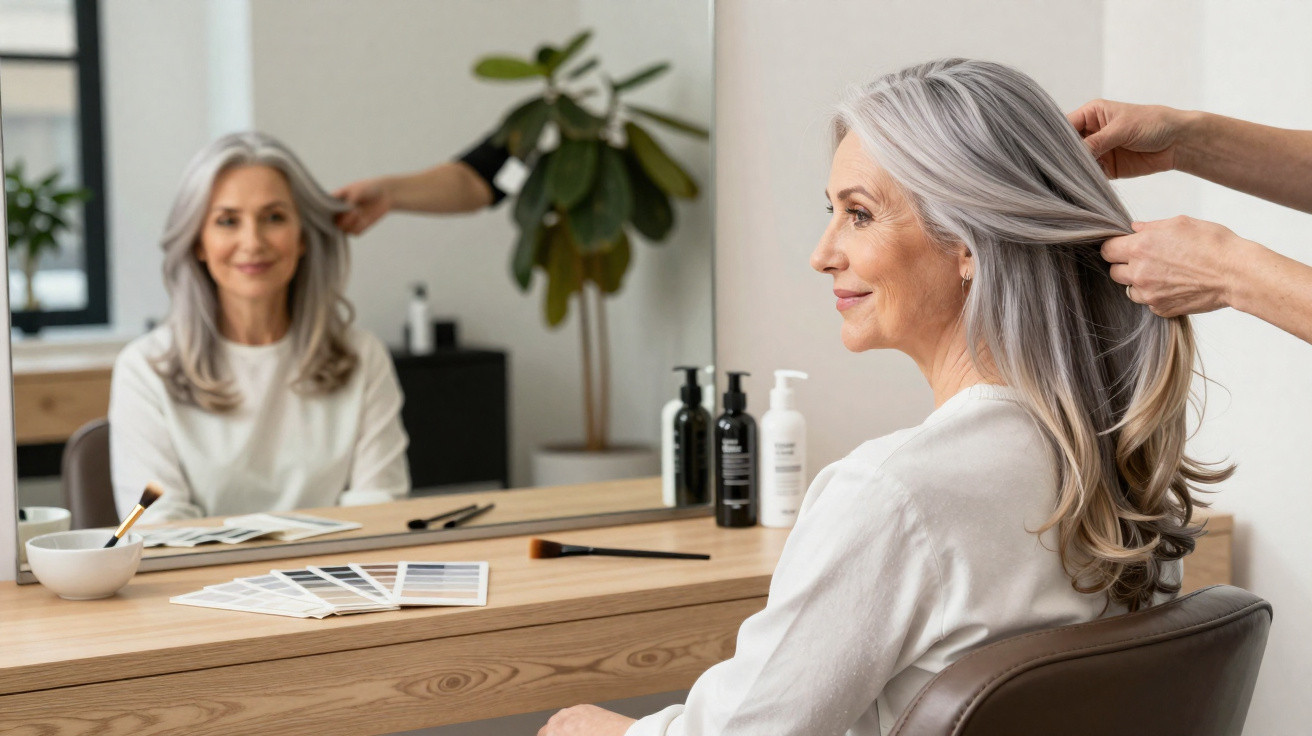
A monthly salon appointment, visible regrowth after just a few washes, and ever-rising bills: many women in their mid-40s and beyond feel as though their hair colour is running the show. At the same time, the desire to let natural grey come through is growing - but in a way that looks fresh, well-groomed and contemporary, not harsh or ageing.
Why so many women are questioning permanent colour
Anyone who has spent years covering their roots knows the pattern: after just two or three hair washes, the first white lines appear again along the parting. Colour can quickly look dull, and with every centimetre of new growth the contrast against your natural shade becomes more obvious.
- An appointment at the hairdresser every four to six weeks
- High costs for colour, aftercare and styling
- Stress because the roots have to be hidden “in time”
- An uncomfortable feeling when the shade suddenly looks unnatural
Meanwhile, well-known women with softly greying hairstyles have shown how refined natural grey tones can look - when they’re done properly. That is exactly where a modern technique comes in, one that has long been considered a trend in international salons.
Quiet Silver: grey hair without harsh regrowth lines
The term “Quiet Silver” does not simply mean “dyeing hair grey”. It describes a transition technique that works with the grey you already have and blends it with several tones so that no hard line appears at the roots.
“Quiet Silver turns a sharp grey root line into a soft, silvery gradient - almost like natural highlighting.”
The concept is straightforward: rather than covering your natural colour completely, the colourist works in multiple layers:
- Ultra-fine, light highlights in silver or ash tones
- Subtle darker strands (so-called lowlights) to add depth
- A cool toner (a patina) in beige-grey or greige to tie everything together softly
This means the regrowth no longer reads as a strict “bar” of colour at the roots. Instead, it looks like a natural fade from silver into the lengths. The overall effect is less obviously coloured and more “naturally polished”.
Who is this transition technique best for?
Especially harmonious on blonde to light brown hair
If you are naturally blonde or light brown, Quiet Silver can work particularly well. A lighter base level makes the blending technique almost imperceptible. Pale greys merge into the foundation shade, and the result can resemble an expensive, soft balayage look - only with genuine grey as part of the mix.
Many women who identify with the idea of being “age-positive” find this approach more comfortable. They do not want to artificially look younger, but they also do not want to turn “white” overnight. Quiet Silver sits neatly in the middle: modern and cared-for, without looking like a disguise.
It can work on dark hair too - with cool-toned shades
With brown or black hair, the method needs more planning, but it can still be done. The crucial point is that the hairdresser uses cool, slightly smoky tones so the grey does not look out of place.
Typical shades here include, for example:
- Ash brown rather than golden brown
- “Mushroom brown” - a taupe-leaning, softly muted brown
- Cool dark brown with very fine, smoky highlights
- Gentle charcoal or graphite reflects for extra depth
Skilled colourists also factor in skin tone. An overly stark, icy grey can make the complexion look washed out or emphasise fine lines. Carefully balanced, cool blends can make the skin look calmer and more even.
How to explain to the salon what you want
Some hairdressers are familiar with the term Quiet Silver, while others are not. What matters most is how you describe your goal. Instead of saying only “I want grey hair”, it helps to be specific.
- Make it clear you want to move away from all-over permanent colour.
- Say that your natural grey should be softly integrated.
- Ask for very fine highlights, not thick, blocky streaks.
- Request cool, slightly silvery or beige-grey tones that suit your complexion.
- Ask about a patina every one to two months to keep the tone looking fresh.
“The key phrase in the salon is: ‘I want a soft, seamless transition into grey, without a harsh root line, with fine highlights and a cool patina.’”
A photo on your phone helps as well: choose images of styles you like and show them at your appointment. In colour consultations, pictures often communicate more than words.
How often do you need maintenance?
One advantage of Quiet Silver is that new growth looks far less dramatic. That can significantly reduce root-related stress. Most hairdressers suggest refreshing it roughly every six to ten weeks.
In practice, it does not usually mean re-colouring everything each time. Often, it is enough to do:
- A new patina to revive the cool tone
- A few targeted, fresh fine highlights around the crown
- A conditioning treatment to combat dryness and boost shine
If you are transitioning from very dark permanent colour, you will need patience. Sometimes several appointments are required to lift out old colour residue without putting unnecessary strain on the hair structure.
Benefits of the method for hair and self-image
Many women say that a softer grey makes them feel noticeably more at ease. They no longer have to hide every white strand; instead, they incorporate it into their styling. That can make the relationship with your own hair feel much more relaxed.
There is also a practical, hair-health angle: colouring less often - or stepping away from strong, all-over dye - generally places less stress on the hair fibre. Over time, the lengths often look less brittle, smoother and shinier.
“Grey hair has long stopped being a flaw - with the right technique, it becomes a style feature.”
Care tips for grey and partially grey hair
Grey hair tends to be drier and can look dull more quickly. The right routine makes a real difference. Particularly helpful are:
- Moisturising shampoos that do not strip the hair too aggressively
- Nourishing masks with oils or plant proteins
- Heat protection before using a hairdryer, straighteners or a curling wand
- An occasional purple shampoo to reduce yellow tones (leave on briefly)
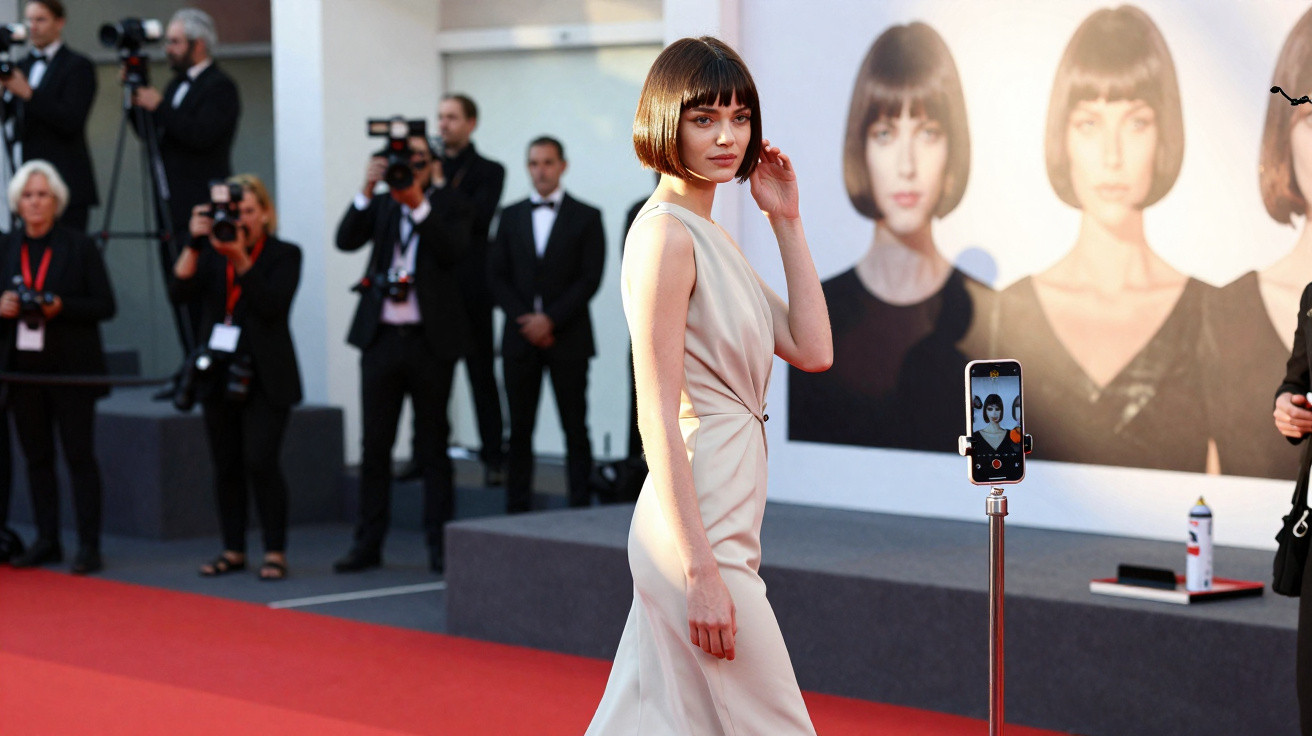
Your haircut matters too: a precisely cut bob, a soft layered cut, or a slightly textured pixie can make grey or partially grey hair look far more modern than long hair that has simply grown out without shape.
What to consider before you decide
If you are thinking about switching to a grey transition technique, it is worth clarifying a few points with your hairdresser beforehand:
| Question | Why it matters |
|---|---|
| How damaged is my hair already? | Highly stressed hair can only tolerate limited lightening and highlighting. |
| How much grey do I have already? | The higher the percentage of white, the easier Quiet Silver is to achieve. |
| Which tones suit my skin? | Tones that are too warm can look tiring; tones that are too cold can look harsh. |
| How much time and budget do I realistically have? | The initial appointment often requires a more involved first treatment. |
If you discuss these points honestly, you reduce the risk of disappointment and get a plan that genuinely fits day-to-day life - rather than a look that only works right after leaving the salon.
Why grey hair is now a style statement
Thanks to social media, TV series and high-profile role models, grey hair has gained a new image. It no longer automatically suggests “giving up on grooming”; it can be a deliberate choice, worn with confidence and style. Short, textured cuts, relaxed waves or a crisp blunt bob can emphasise the colour and stop it feeling heavy.
If you carry on colouring in silence even though it no longer feels right, you may be missing a lot of potential. A well-planned transition such as Quiet Silver can be the step that makes hair feel easy again - and shows that grey strands are not the end of attractiveness, but the start of a new look.

Comments
No comments yet. Be the first to comment!
Leave a Comment