
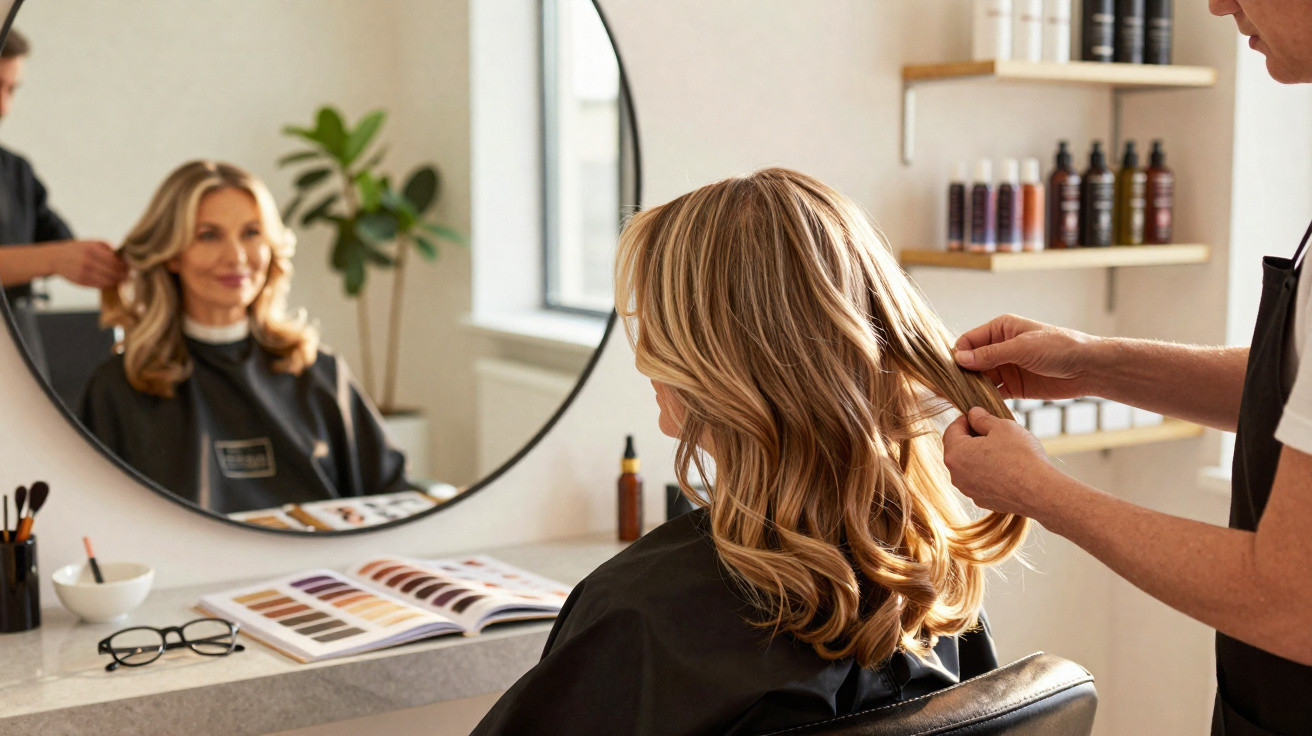
Many women reach for hair dye at some point to hide grey roots. Yet it’s surprisingly common to leave the salon - or step away from the bathroom mirror - with a shade that makes you look harsher, more tired and, in reality, noticeably older. Professional hairdressers see the same missteps again and again. Three colouring choices stand out because they almost automatically trigger the familiar “granny effect”.
Why hair colour becomes tricky after 60
As the years go by, it’s not only your hair that changes - your skin does too. Complexion often loses brightness, can take on a slightly yellow cast and may become more uneven. At that point, the colour on your head plays a huge part: it can soften fine lines visually, or make every line stand out more.
"An unsuitable colour intensifies shadows, wrinkles and tiredness - while a well-chosen shade brings light back into the face."
That’s why professional colourists focus less on whatever is trending and far more on:
- your skin undertone (cool, warm, neutral)
- your natural base hair colour
- hair density and texture
- your make-up habits (a lot, a little or none)
Even so, many women - out of uncertainty or routine - end up choosing shades that add years at a glance. Here are the three biggest pitfalls.
Mistake 1: Going too dark - the “helmet effect”
Choosing a very dark brown or even a deep black can feel tempting at first: white hairs disappear, the contrast looks strong and the coverage is reliable. After 60, though, this move almost always backfires.
Dark shades can make the complexion look paler and draw attention to under-eye shadows and every small crease. It’s especially unforgiving when skin has already lost firmness and natural radiance. The face can read as harder - sometimes even stern or grumpy - even when you don’t feel that way at all.
"Very dark colours can quickly look like a heavy colour helmet in everyday life - nothing moves, nothing reflects light."
A further issue is that boxed dyes often turn progressively darker with repeated applications. If you leave the colour on a little too long each time or use extra product “just to be safe”, it’s easy to end up two or three levels deeper than intended.
How to avoid the too-dark trap
- Choose one shade lighter than you think you need.
- Prefer slightly translucent tones rather than opaque black-brown.
- Keep the root area a touch deeper while softening the lengths - it looks more alive.
- Have a hairdresser regularly check whether the colour is “dropping” darker over time.
Warm, soft browns with gentle reflections are often ideal - think hazelnut, caramel or milky coffee. They add depth without closing the face in.
Mistake 2: Extreme blonde - from brassy yellow to complexion-washing
The opposite extreme can be just as risky: jumping to a very light, high-impact blonde. Many women hope it will make them look younger and fresher. That only works when the tone and technique are perfectly matched to the person - in real life, the reverse is more common.
Two recurring problems show up again and again:
- Strong yellow/brassy tones - hair looks dull, uneven and unkempt.
- Icy, washed-out blonde - skin looks ashen and the complexion loses all warmth.
"Blonde that’s too light may cover grey hair, but it can also visually grey out the entire face."
A very cool, near-white blonde in particular can make veins, redness and pigment marks more noticeable. If you already wear little make-up, it can quickly make you look unwell or drained.
How to tell the blonde doesn’t suit you
A simple everyday check: if you find you need significantly more foundation, blusher or lipstick just to make your hairstyle work with your face, the colour is often off. A harmonious shade should still look good on a “no-make-up day”.
Instead of drastic changes, hairdressers usually recommend a more moderate approach:
- Go only one to two levels lighter than your natural colour.
- Choose golden, creamy or honey-toned reflections to bring warmth.
- Use highlights and soft transitions rather than bleaching everything solidly blonde.
Done this way, blonde looks polished and fresh - without appearing artificial or “painted on”.
Mistake 3: A single solid colour - no movement, no depth
The third colouring trap is less obvious, yet just as ageing: one completely uniform shade from roots to ends. Whether it’s mid-brown, a red tone or blonde, if nothing catches and breaks the light, the result can look flat and “pulled on”.
"One continuous, identical colour takes away all liveliness and can quickly look more like a wig than natural hair."
This effect is especially noticeable as hair starts to thin. The colour reads like a pressed-down sheet, and the hair can appear to have less volume than it truly does. Fine lines at the temples and around the eyes can look stronger because there’s no interplay of light to soften them.
Why dimension and reflections matter after 60
Subtle highlights, gentle shading or a discreet shift from a slightly darker root into lighter ends gives the hairstyle movement. Light hits the brighter areas and shadows help disguise hard outlines. The end result also tends to look more current - and noticeably more expensive - even when the technique itself is simple.
Popular in-salon options include:
- Balayage: freehand highlights designed to look sun-kissed.
- Soft ombré blends: a slightly deeper root with gently lightened lengths.
- Face-framing colour: lighter accents placed strategically around the face and forehead.
Even well-maintained grey or silver can look extremely modern - provided the tone is clear, lightly glossy and not yellowed. Many hairdressers pair it with a cool-toned gloss treatment to neutralise brassiness and boost shine.
The better approach: small adjustments instead of radical changes
If you want a fresh, flattering hair colour over 60, you don’t need to chase every trend. Often, minor corrections are more than enough. A slight lift around the face, a few soft highlights or a warmer reflection can be all it takes to visually take years off.
| Problem | Less flattering choice | Smarter alternative |
|---|---|---|
| Lots of grey regrowth | Jet black or very dark brown | Soft brown with fine, lighter highlights |
| Pale complexion | Icy-cool, almost white blonde | Creamy blonde with a slight golden warmth |
| Thinning hair | Completely uniform colour | Gentle blends and reflections for visual volume |
What a professional always asks before colouring
A good hairdresser rarely starts by mixing colour straight away. First come the questions: How much time do you want to spend on maintenance and top-ups? How often do you wear make-up? Do you prefer muted shades in your wardrobe, warm tones or cooler colours? All of this influences which shades will genuinely work day to day.
An honest assessment of hair condition matters too. Heavily damaged, porous hair absorbs pigment unevenly, which can make shades appear darker or patchier than expected. In those cases, a routine focused on masks, bonding products and less heat often delivers more of a rejuvenating effect than another round of dye.
Loving grey hair - or disguising it cleverly
If you like your grey or white hair, you don’t have to cover it up. Modern short cuts and mid-length styles, crisp lines and a cleanly maintained silver tone can look very chic. A light silver shampoo, shine spray and regular trims are often enough.
If you’re not (yet) comfortable with grey, it’s usually best to choose transitional options: demi-permanent colour that grows out softly, gentle highlights that blur the regrowth line, or gloss treatments that add shine and a subtle shift in tone without completely changing your look.
Ultimately, what matters isn’t whether your hair is dark, blonde or grey - it’s whether the shade, technique and care suit you. Avoid the three major pitfalls and your colour will look less like a disguise and more natural, bright and full of life.




Comments
No comments yet. Be the first to comment!
Leave a Comment