
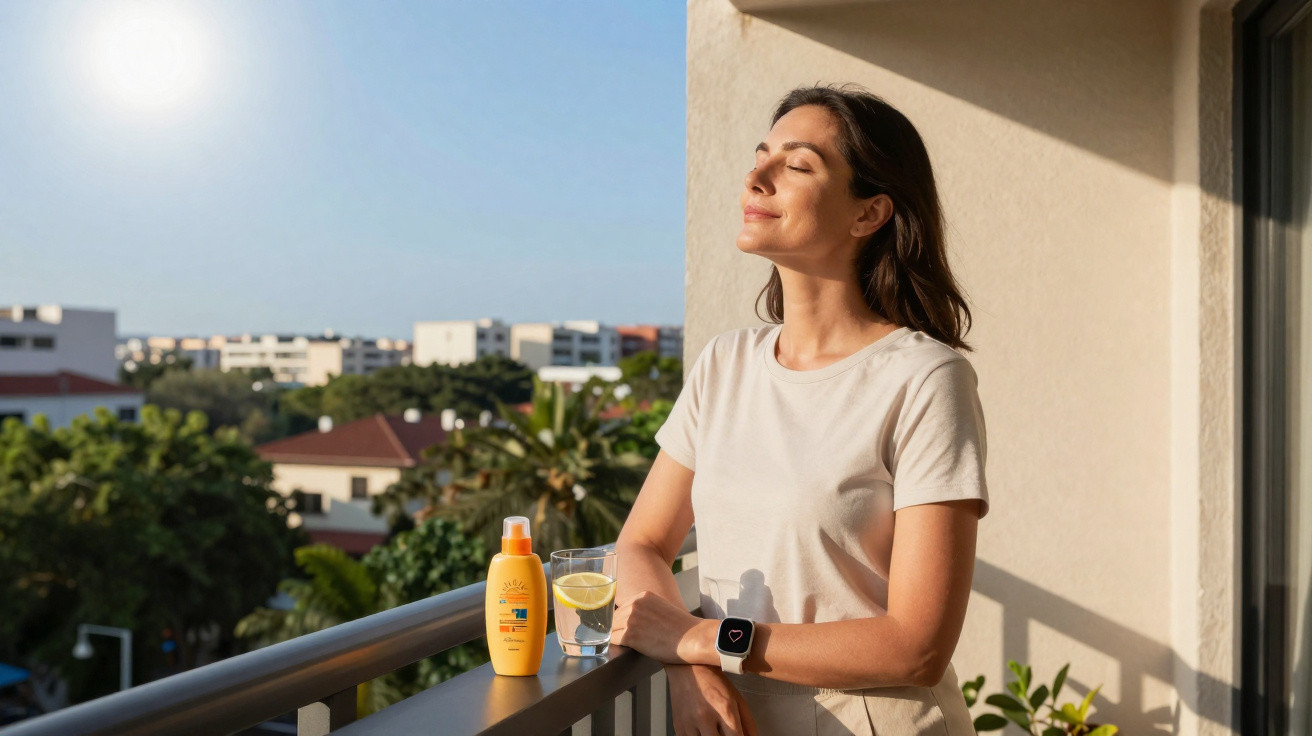
A large Swedish study is now challenging that certainty head-on.
Over more than two decades, researchers tracked the lives of tens of thousands of women and arrived at a striking finding: people who consistently stay in the shade do not, on average, live longer - they live shorter lives, and by a margin that brings active smoking to mind. So what does this mean for how we think about sunshine, sunscreen and the fear of skin cancer?
What the Swedish study actually shows
From 1990 to 2010, scientists at Sweden’s Karolinska Institute followed 29,518 women aged 25 to 64. At the outset, every participant provided detailed information about her sun habits. The researchers then grouped the women into three broad categories:
- Women who actively avoided the sun
- Women with more moderate sun exposure
- Women with frequent or regular sun exposure
Over the next 20 years, the team recorded all deaths within the cohort and linked them to these sun-exposure categories. They also accounted for a wide range of other factors that can affect mortality, including education level, body mass index, smoking, exercise and alcohol intake.
"Women who consistently avoided the sun had roughly twice the risk of dying compared with women who regularly sought sunlight - regardless of the cause of death."
The contrast was particularly stark when comparing non-smokers who avoided the sun with smokers who spent a lot of time in the sun: the life expectancy of the two groups was very similar. That does not mean sunlight can “cancel out” smoking - but it does underline how strongly long-term sun avoidance appears to be linked to overall mortality.
How many years of life may be at stake
The researchers estimated that women with the lowest sun exposure lost, on average, 0.6 to 2.1 years of life compared with those who had the highest exposure. That may not sound dramatic at first glance, but across a population it represents a meaningful shift.
One crucial caveat: this is an observational study. It can reveal associations, but it cannot definitively prove that too little sun directly causes higher mortality. Unmeasured influences could still be involved. Even so, the association remained after adjustments for lifestyle and social factors, making the result difficult to dismiss.
Why sunlight may protect the body
Vitamin D: more than a “bone vitamin”
The most obvious explanation is vitamin D. Under UVB radiation, the skin produces a hormone precursor that does far more than support bones. Researchers link adequate vitamin D levels with, among other things:
- a more resilient immune system
- a lower risk of certain infections
- better cardiovascular health
- fewer fractures in later life
If you avoid the sun entirely, deficiency becomes more likely - especially in northern countries. Diet and supplements can partly compensate, but in practice they often fail to reach everyone who would benefit.
Blood pressure, blood vessels and the body clock
Vitamin D is not the only plausible pathway. UV exposure can prompt the skin to release nitric oxide - a substance that widens blood vessels and can reduce blood pressure. That effect could ease the load on the heart and circulation.
Daylight also influences our internal clock. Sunlight helps synchronise the circadian rhythm and affects sleep, hormones and metabolism. People who rarely get meaningful daylight may be more prone to sleep disruption, weight gain and high blood pressure - all of which raise the risk of cardiovascular disease.
Particular factors in Scandinavian countries
Because the study was carried out in Sweden - a country with long, dark winters - natural light is scarce, especially from November to February. In such latitudes, systematically avoiding the sun can substantially worsen both light deprivation and vitamin D deficiency.
"In regions with very few hours of sunshine, total sun avoidance can have far more serious consequences than in more southern countries."
That means the findings cannot be transferred one-to-one to southern Europe or, say, southern Spain. Still, the core message - that extremely low sun exposure can harm health - is relevant to Central Europe too, particularly in the darker months.
Skin cancer versus heart attack: an uncomfortable trade-off
One point is not in doubt: more sun also means more skin cancer. The Swedish data indicate that as sun exposure increases, skin cancer becomes more common, including dangerous melanoma - which aligns with previous evidence.
What is more revealing is overall mortality. Despite a higher risk of skin cancer, women with regular sun exposure died less often on average than those who kept out of the sun. The main driver of the higher death rate among the “shade” group was cardiovascular disease - heart attack, stroke and heart failure.
Context matters: in Sweden, melanoma is relatively uncommon compared with cardiovascular disease. Skin cancer is also often detected early there and can then usually be treated effectively. By contrast, heart attacks and strokes are far more likely to be fatal.
What counts as “healthy” sun exposure?
The researchers are not calling for a return to the era of heavy tanning salons or hours of unprotected sunbathing. Instead, the data point towards a balanced approach:
- short, regular periods outdoors in daylight
- avoiding sunburn at all costs
- using sunscreen and protective clothing when longer or very intense sun exposure is likely
- extra caution for very fair skin, lots of moles, or a family history of skin cancer
In other words, the sun is not an enemy that must always be avoided - it is a natural resource that should be used deliberately and with respect.
What readers can do in practice
Everyday ways to get more light without regrets
Small routines can noticeably increase daylight exposure without unnecessarily driving up skin-cancer risk. For example:
- take your lunch break outside, even under cloudy skies
- walk or cycle to work or the shops when you can
- use spring and autumn for purposeful walks when the sun is not yet fiercely strong
- in summer, avoid the intense midday hours and choose late morning or later afternoon instead
Anyone at high risk of skin cancer should discuss their personal balance with a dermatologist - in some cases, consistent vitamin D supplementation and stricter UV avoidance may be the safer option.
How robust are the findings?
Even with a large sample and long follow-up, uncertainties remain. The researchers could only work with what the women reported at the start. Changes in behaviour over the years are only captured to a limited extent, and some pre-existing health issues may not have been fully recorded.
Even so, the study’s strengths are its long observation period, the large number of participants and the statistical adjustments for many confounders. The overall direction also fits with other research linking sunlight to blood pressure, vitamin D levels and cardiovascular risks.
Why this debate needs to be reopened now
For decades, many public-health campaigns have presented sunlight mainly as a hazard. There were reasons for that: in sunny holiday destinations and with sunbeds, skin-cancer rates have been rising for years. The Swedish long-term study now suggests that the flip side - total or near-total sun avoidance - can also create health problems.
This leaves policymakers and clinicians with a delicate task. They must warn clearly against sunburn and excessive tanning while avoiding the impression that people should always stay in the shade. For countries with long winters such as Germany, Austria and Switzerland, this nuance is especially important.
Ultimately, the message is simple but unfamiliar: making room for sensible doses of sunlight in everyday life could do your heart a real favour - and it may be worth questioning the fear of every single sunbeam.






Comments
No comments yet. Be the first to comment!
Leave a Comment