
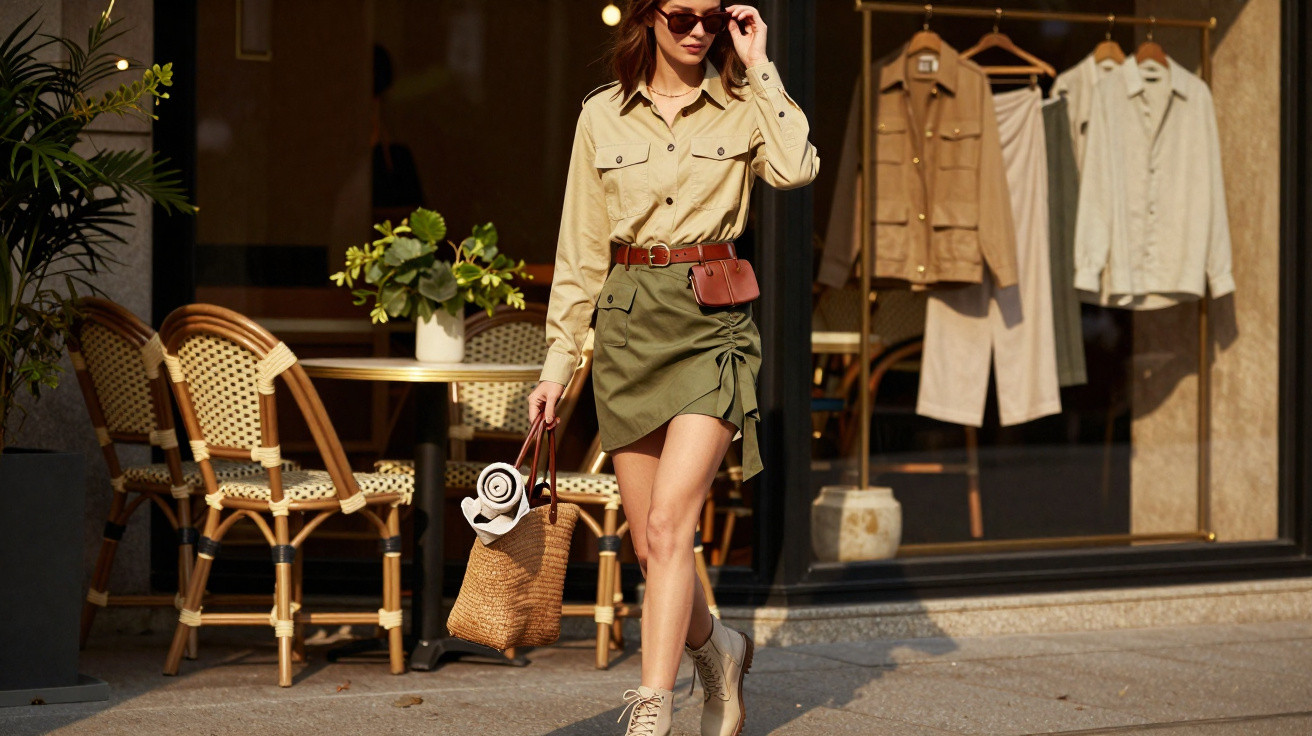
In recent months, the so-called visual safari has been appearing on catwalks and in street style, emerging as a counterpoint to the minimalist look that shaped previous seasons. Major international fashion titles such as Vogue and Harper’s Bazaar have been spotlighting this shift, which favours functional, adaptable pieces designed to suit multiple settings, with utilitarian cues, an earthy colour palette and practical touches like roomy pockets, ties and comfortable silhouettes.
What is the visual safari look, and how has it become part of today’s trends?
The term visual safari describes a style rooted in clothing historically worn on expeditions in hot climates, reworked into a polished urban wardrobe. Rather than costume-like outfits, the focus falls on lightweight fabrics, updated cuts and refined finishing. Key items include safari-style jackets and shirts, typically defined by front patch pockets, visible button fastenings and belts that bring shape to the waist.
Colour plays a leading role in this aesthetic, with sand, khaki, caramel, olive green and brown balanced against white, off-white or black. Breathable materials such as cotton, linen, twill and viscose help keep the look wearable, while the functional-fashion mindset prioritises garments that allow ease of movement, hold up on long journeys and coordinate effortlessly.
Watch a video on the Moda Ilustrada YouTube channel covering the main functional fashion trends, the safari chic style, and how to wear wrap skirts in everyday life:
https://www.youtube.com/watch?v=uK4mC8n2XyE
What are the key practical features of the visual safari look?
Safari wear leans into utilitarian details that bring an adventurous feel into day-to-day city dressing, keeping outfits “ready for anything”. Pockets, lapels, pleats and controlled slits show up both in luxury collections and on the high street, reflecting demand for pieces that are comfortable, understated and genuinely useful for daily wear.
Among the most common design features, the elements below help explain why the visual safari look has become an alternative to stricter minimalism:
- Large pockets on shirts, waistcoats, skirts and dresses, handy for carrying essentials.
- Belts and fabric ties that define the silhouette without restricting the body, ideal for extended wear.
- Exposed buttons in wood, resin or matte metal, adding texture without looking fussy.
- Defined seams and panel cuts that structure the garment and support movement.
- Midi lengths suited to commuting, travel and workplace settings.
Why are wrap skirts so prominent in the visual safari look?
Within the visual safari wardrobe, wrap skirts stand out because they combine practicality with an easy-to-adjust fit, without relying on zips or complicated fastenings. A panel of fabric that crosses at the front or side allows quick readjustment-an advantage for travel, shifting weather and fast-paced routines.
Design studies note that this shape reinforces the idea of movement, especially when made in linen, structured poplin or lightweight twill. Common updates include oversized side pockets, a front yoke, controlled slits and a self-fabric belt, usually in a straight or gently A-line midi cut. They are often styled with white shirts, neutral vests, pocketed waistcoats and even caramel-coloured faux leather.
How to build a safari-inspired capsule wardrobe for everyday wear
To adopt the visual safari look in a straightforward way, many image consultants suggest creating a small capsule wardrobe that works across work, leisure and travel. The approach is to choose a limited number of well-considered items in a tight palette of earthy tones and neutrals, ensuring everything mixes and matches without sacrificing comfort.
A practical starting point is to pick three to five core colours, focus on comfortable foundations such as straight-leg trousers, midi wrap skirts and lightweight dresses, then add utility layers like jackets, waistcoats and pocketed shirts. Footwear such as flat sandals, neutral trainers and lightweight boots supports long periods on your feet, while restrained accessories-medium-brim hats, structured crossbody bags and leather (or leather-look) belts-round out a versatile, organised wardrobe aligned with modern demands for mobility.
Comments
No comments yet. Be the first to comment!
Leave a Comment