
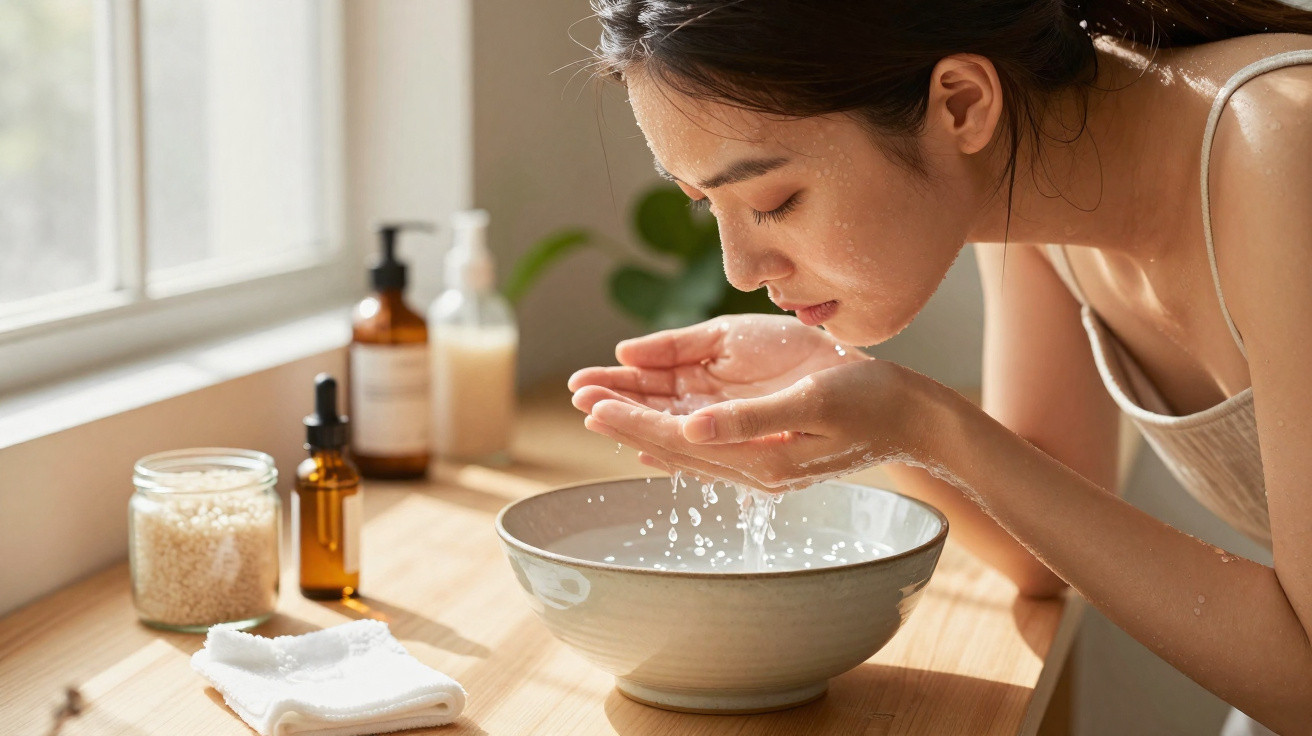
The quest for flawless skin often brings long-established rituals back into focus. The well-known use of nourishing rice water draws on the centuries-old secrets of Asian beauty, helping to support a naturally luminous look in a way that feels entirely healthy for everyday life.
How did rice become an ancient beauty secret?
Historically, cultivation of the grain known as Oryza sativa began around five thousand years ago. Across different ancient civilisations, this cereal featured in daily skin self-care practices, as people recognised the beneficial properties it could offer in the pursuit of renewed-looking skin.
Around one thousand five hundred years before Christ, Chinese and Japanese traditions used this ingredient to soothe skin inflammation. With this simple, traditional approach, the skin became noticeably calmer-an effectiveness that modern science would later confirm with greater safety.
Here are some key historical milestones in the use of this cereal in traditional facial-care rituals:
- Oryza sativa: The scientific name of the grain cultivated for more than five thousand years.
- Eastern origin: Chinese and Japanese communities used the water to soothe inflamed skin.
- French tradition: Rice powder was used in the early twentieth century for imperfections.
- Scientific validation: Natural elements have been studied, confirming genuine benefits for skin tissue.
- Illuminating effect: A return to historical customs that today supports radiant, more even-looking skin.
What essential nutrients are found in the grain?
This valuable cereal stands out for being exceptionally rich in powerful natural antioxidants. Compounds such as vitamin E and vitamin A help fight day-to-day free radicals, which are among the main drivers of feared premature ageing in facial cells.
In addition, the extracted water contains starch and niacin, also known as vitamin B3. These specific elements can provide an immediate natural astringent effect, while also creating a momentary surface glow that leaves the skin looking visibly silkier and more deeply hydrated.
Watch the full explanations about these compounds directly on the Dra. Joyce Rodrigues YouTube channel:
How does rice water help with facial brightening?
Rice’s impressive brightening action is linked to the presence of well-established components. One of them is the widely recognised kojic acid, a substance frequently used when developing various depigmenting cosmetic formulas that help tackle unwanted spots and even out skin tone.
| Kojic Acid | |
|---|---|
| Proven depigmenting action | Kojic acid is a powerful active derived from rice and purified through advanced cosmetology. |
| Its safe use supports efficient results in brightening facial and body hyperpigmentation. |
Alongside this, the milky liquid obtained from the grain’s first rinse concentrates the most relevant surface nutrients. It offers an excellent calming effect on skin tissue, directly supporting regeneration of the protective barrier against external environmental stressors.
See the main benefits these active components can bring to a daily care routine:
- Gradual reduction of dark spots on the face.
- Visible evening-out of the skin’s natural tone.
- Support for cell renewal in the outer layers.
Why do dermatologists warn against DIY recipes?
Although homemade mixtures may look appealing and low-cost, they can conceal unseen risks to skin health. Without control over how the grain is grown and harvested, it is impossible to ensure the nutrient concentration is truly effective or completely safe.
The results from these handmade preparations also tend to be very subtle and only appear over the long term. In addition, the lack of molecular purification increases the likelihood of bacterial contamination, which can trigger severe irritation in patients with more sensitive skin who are currently more exposed.
The main reasons to choose controlled, industrial products rather than unsupervised homemade formulas include:
- Laboratory-standardised molecular concentration.
- Complete absence of harmful agricultural impurities.
- Considerably faster results that can be measured scientifically.
How to include a rice-derived ingredient in your daily routine
The best way to access the benefits of this grain is to opt for suitable, technology-driven cosmetics. Modern cosmetology can isolate pure, concentrated molecules and incorporate these actives into products designed to improve the texture of facial tissue with total practicality.
Formulas containing kojic acid can help brighten not only the face, but also underarms and the groin area. Always seek specialist guidance to begin an effective treatment, following correct use of rice water on the face in a safe and highly beneficial way.




Comments
No comments yet. Be the first to comment!
Leave a Comment